Monitoring

Carbon Dioxide Levels in Classrooms

What CO₂ actually measures in a classroom, how to read short-term spikes versus longer patterns, and what one reading does and does not tell you.

Published 9 min read SchoolAirQuality.uk
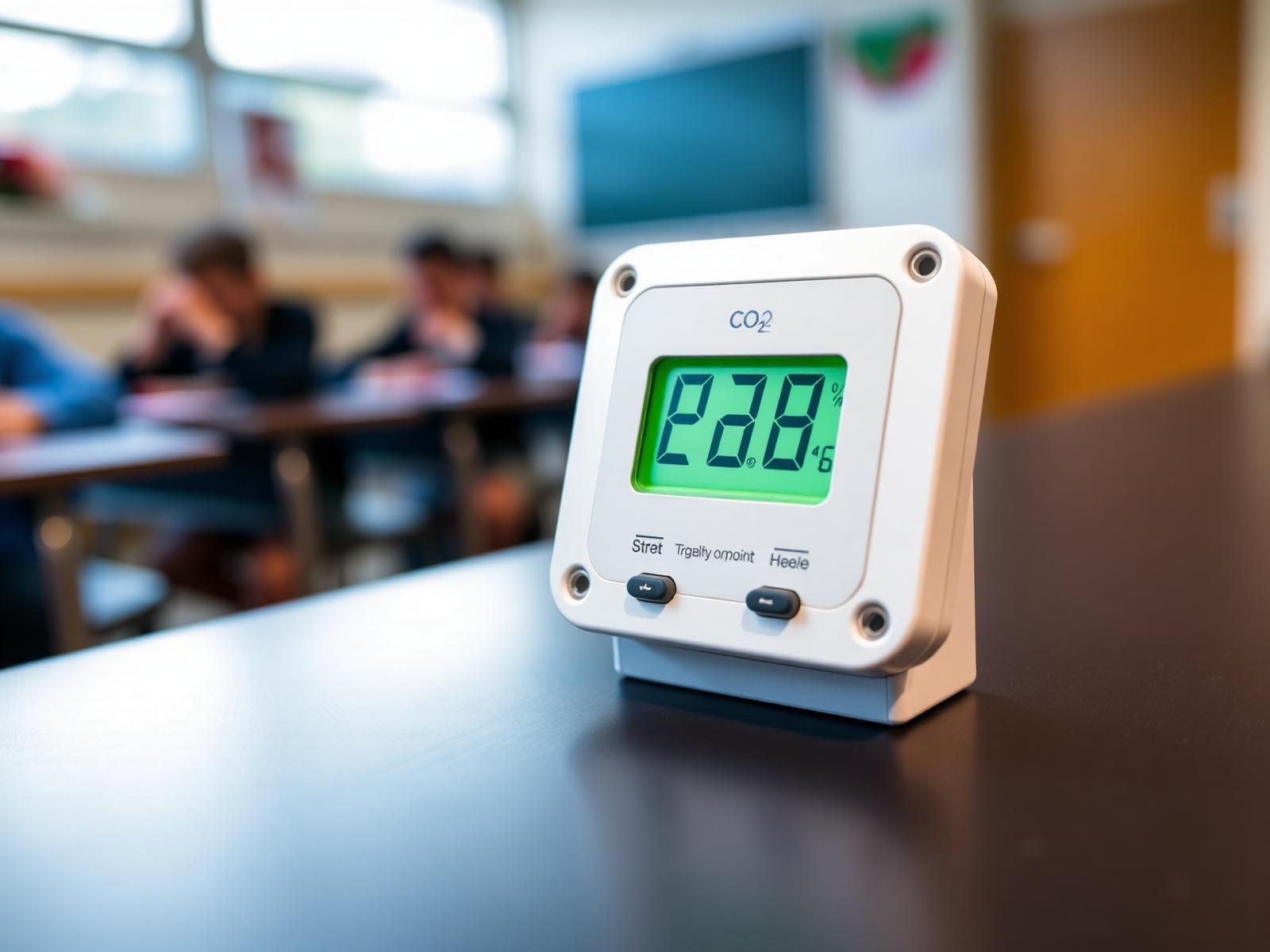
Wall-mounted CO₂ monitor in a UK classroom near desks and a window

What CO₂ readings actually mean

Carbon dioxide (CO₂) is a normal component of the air we breathe. Outdoors, levels typically sit around 420 parts per million (ppm). Indoors, levels rise because people exhale CO₂ as part of normal respiration. In a classroom, CO₂ readings are best understood as a proxy for ventilation effectiveness relative to occupancy — not as a pollutant of direct health concern at typical indoor concentrations.

Put more simply: if CO₂ is rising in a classroom, it is usually because more people are producing it than the ventilation is removing. That is what makes it such a useful, low-cost indicator in school buildings.

Short-term readings versus longer patterns

One reading is rarely the answer. A handheld meter at the end of a lesson catches the peak but tells you nothing about how the room got there, or whether the reading is typical. Longer monitoring — over a day, a week, or a term — reveals the more useful picture: how the room performs through the timetable, across weather conditions, and across different teachers' window-opening habits.

It is also important to interpret readings in context. A CO₂ peak immediately after a busy lesson is expected. A persistent high baseline before any pupils arrive is a different signal entirely — it usually points to a ventilation or commissioning issue rather than occupancy.

Why one number is not a compliance verdict

It is tempting to treat a single CO₂ reading as a pass or fail. Guidance commonly references threshold values, but presenting one spot reading as a complete compliance result oversimplifies the question. Standards generally describe what ventilation should achieve over time, not what a single one-second sample should be.

A useful CO₂ assessment looks at typical daily peaks, average levels during occupied periods, and how often elevated values occur — not whether a particular instant fell above or below a line. For a more substantive view, schools often combine CO₂ data with a ventilation assessment.

Monitoring options for schools

Schools have several options. Short-term loggers placed in a few rooms for a couple of weeks give a focused snapshot. Permanent classroom air quality sensors provide continuous data, useful for ongoing operational decisions. Real-time classroom monitoring can support staff awareness during the school day.

Whatever the approach, the value comes from interpretation. Raw data alone rarely changes anything — the difference is made when patterns are read in context and translated into practical operational recommendations.

Next step

Want this looked at in your school?

Independent UK school air quality consultants. We scope the question, do the work and explain the findings in plain language.