What VOCs are
Volatile organic compounds are carbon-based chemicals that evaporate at room temperature. They are a normal feature of indoor air at low concentrations and become a concern when specific sources or combinations of sources elevate concentrations beyond what ventilation can comfortably manage. The term covers hundreds of compounds; many are emitted together from the same material categories, which is why a combined picture (often expressed as TVOC) is a useful first lens.
Common school sources
Most VOC concerns in UK schools trace back to a recognisable shortlist of categories. The exact mix varies by school, but the categories are consistent.
- Cleaning products and disinfectant chemistries used across the site
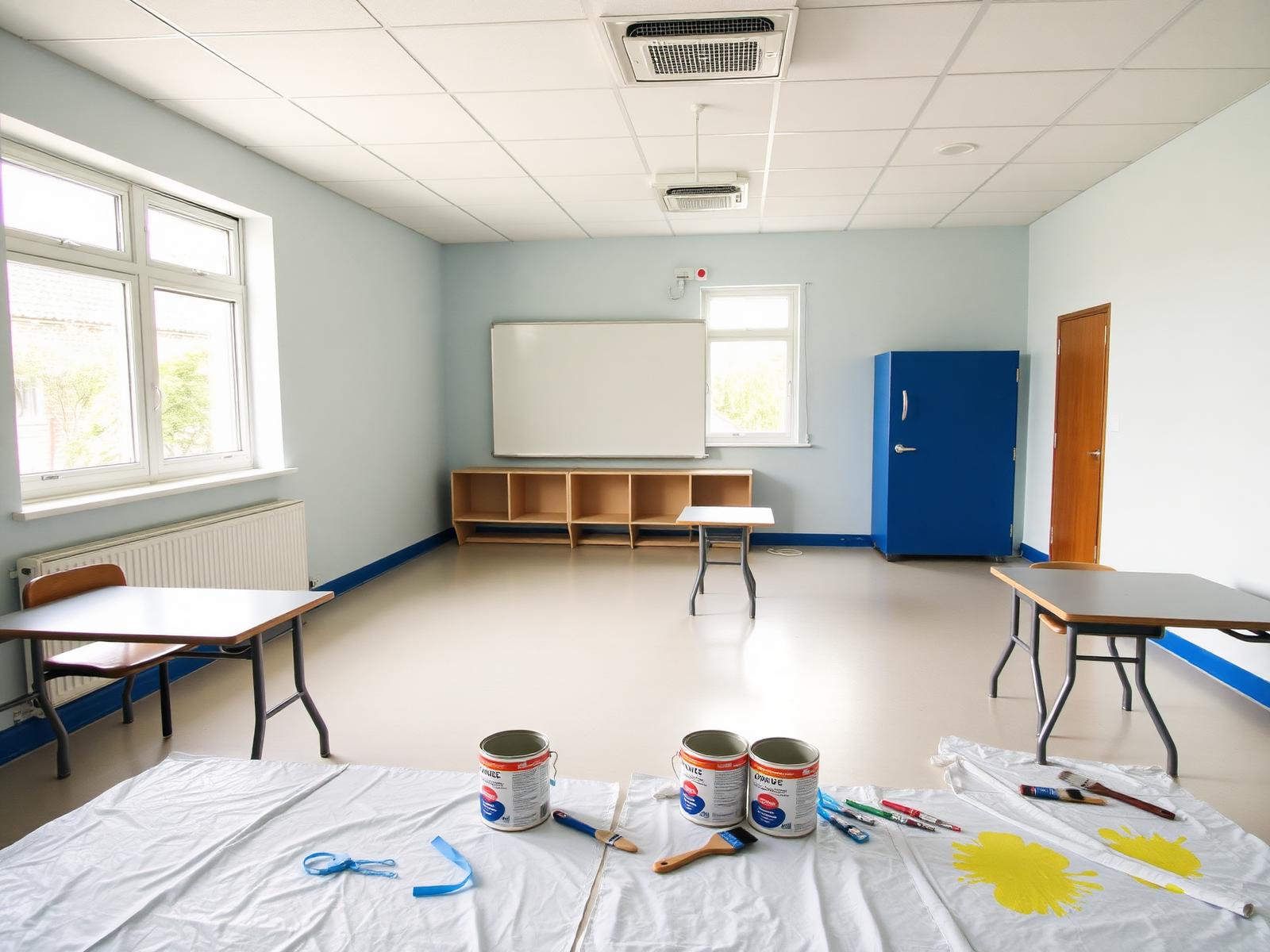
- Paints, varnishes and coatings, particularly after redecoration
- Adhesives in flooring, panelling, joinery and signage
- New and recently installed furniture, cabinetry and storage
- Art and design materials: solvents, glues, paints, markers
- Science activities and stored chemicals where ventilation is limited
- Plug-in air fresheners and scenting devices in offices and toilets
Screening versus targeted sampling
Screening typically uses portable instruments to measure TVOC (the combined concentration of detected VOCs) across rooms and through the day. It is fast, broadly informative and useful for identifying which rooms warrant deeper investigation.
Targeted sampling identifies and quantifies specific compounds — for example confirming a suspected solvent in a workshop, or characterising the VOC profile in a recently fitted-out room. This is laboratory analysis on samples collected on site and is most useful when the question has been narrowed by screening or by observation.
Most school assessments combine both: screening to identify where to look more closely, targeted sampling to confirm what is driving the signal where it matters.
Formaldehyde sits separately
Formaldehyde is technically a VOC, but its dominant sources (composite-wood furniture, flooring, adhesives), its sampling method and its interpretation framework are different enough that it is normally treated as a dedicated test. Where formaldehyde is the specific concern — typically after refurbishment or new fit-out — see our formaldehyde testing page rather than commissioning a general VOC test.
Interpretation considerations
TVOC and individual VOC results are interpreted against published guideline values (including CIBSE TM40 and WHO references), the room context (recent refurbishment, ventilation, occupancy) and the practical question that led to the testing. A single reading is not a compliance certificate; it is one piece of evidence in a wider picture, and reporting reflects that.
Ventilation and source management
Practical responses to elevated VOC findings combine ventilation (using systems to specification, increasing flush periods after high-emission activities, opening windows where appropriate) with source management (specifying lower-emission cleaning chemistry, scheduling solvent-heavy art or DT lessons to allow recovery, allowing new furniture to off-gas in well-ventilated areas). Where elevated readings persist after reasonable mitigation, more targeted sampling and a wider assessment usually follow.
Suitable schools and settings
- Schools post-refurbishment or repainting
- Art, DT and science teaching spaces
- Sites reviewing cleaning specifications
- Estates teams responding to recurring chemical odour complaints
Frequently asked questions
What are VOCs?+
Volatile organic compounds are a broad family of carbon-based chemicals that evaporate at room temperature. They are present in many everyday materials and products — cleaning chemistries, paints, adhesives, furnishings and certain activities. 'Total VOCs' (TVOC) describes the combined concentration, while individual compounds are measured separately when needed.
When does VOC testing make sense for a school?+
Useful triggers include recurring chemical odour complaints, recent refurbishment or repainting, new furniture installation across multiple rooms, changes to cleaning specification, and concerns raised by staff in specific teaching spaces such as art, DT or science rooms.
What is the difference between screening and targeted sampling?+
Screening (often TVOC measurement) gives a broad indication of whether VOC concentrations are elevated and where. Targeted sampling identifies and quantifies specific compounds of interest, typically following a screening pass that has narrowed the question. Most school assessments combine the two.
Is formaldehyde measured as part of VOC testing?+
Formaldehyde is treated separately. It is a VOC, but its sources, sampling method and interpretation differ enough that it is normally addressed by a dedicated test. See our formaldehyde testing page for that work.
What do the results lead to?+
Typical outputs include a summary of where VOCs were elevated, the most likely source categories, practical mitigations (ventilation, cleaning specification, scheduling of high-emission activities) and — where appropriate — a recommendation for further targeted sampling. Capital options are sequenced behind operational changes.
Ready to take a closer look at your school's air?
Tell us about your buildings and the rooms or year groups you're concerned about. A specialist will be in touch within one working day.