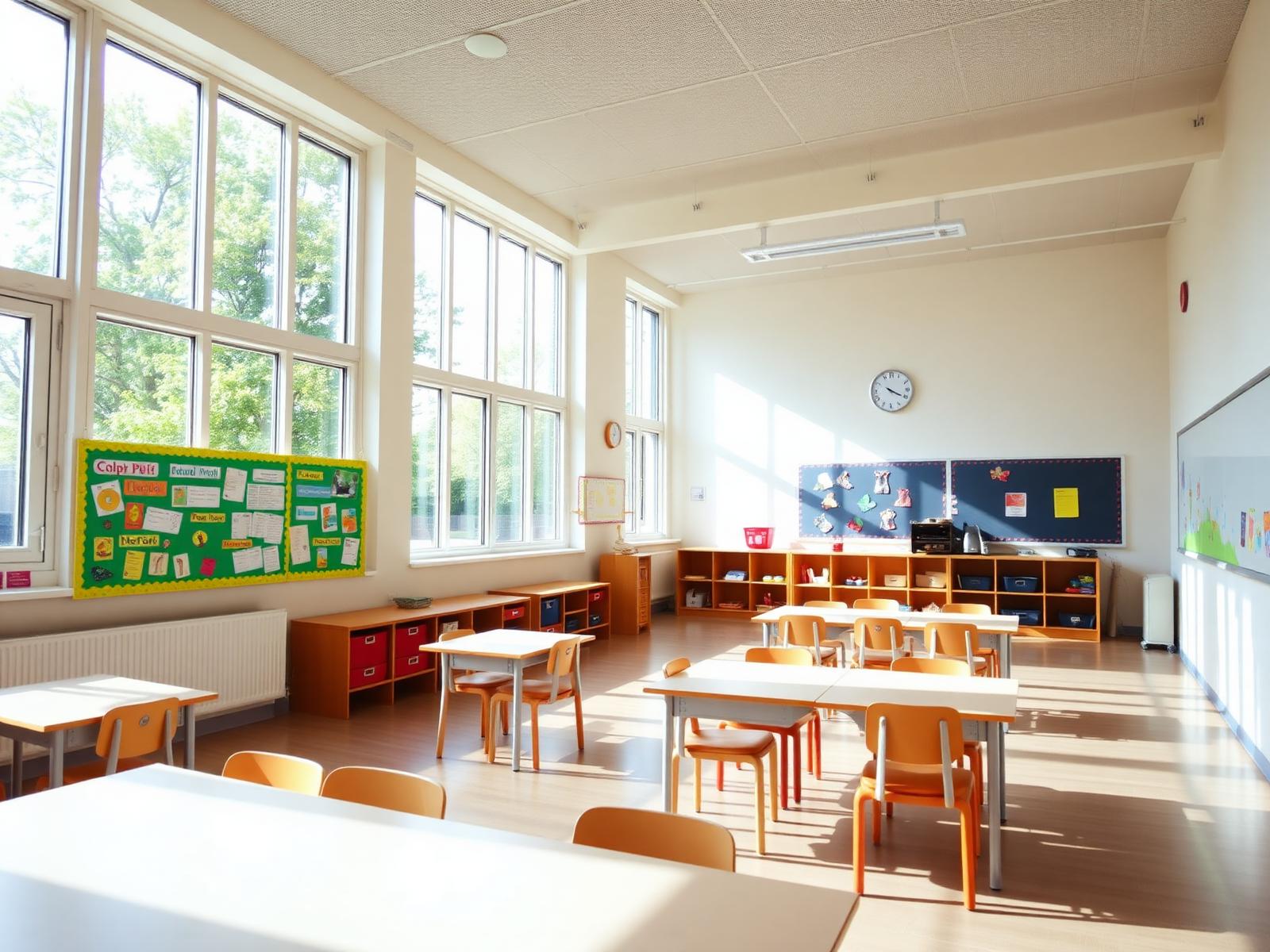
Why a whole-estate view matters
Indoor air quality is rarely uniform across an educational site. A modern science block can perform very differently from a 1970s teaching wing on the same campus; a hall on assembly mornings has a different load from a quiet library on the same day. Treating every room the same misses both the problems and the wins; a whole-estate view sequences attention to where it most pays off.
It also gives finance and estates leaders a basis for decisions. Comparing rooms and buildings on the same terms — same assessment method, same metrics — is what turns a list of complaints into a defensible improvement plan.
Room types and occupancy patterns
Different educational spaces present different challenges. The same building can contain all of them, often within metres of each other.
- Classrooms — high, regular occupancy and the dominant driver of CO₂
- Halls and assembly spaces — short bursts of very high occupancy
- Libraries and study areas — long, lower-density occupancy
- Science laboratories — specific pollutant sources and dedicated ventilation
- Art and design rooms — chemicals, dust and materials emissions
- Dining halls and food prep — cooking emissions and moisture
- Sports and changing facilities — high moisture loads and odour control
- Offices, staff rooms and meeting rooms — often missed in school-focused work
- Circulation, stairs and corridors — buffer spaces that influence wider airflow
Building age, fabric and condition
Older estates often have more variable conditions between rooms and depend more heavily on natural ventilation and operational discipline. Newer estates typically have more capable mechanical or mixed-mode systems and depend on those systems running correctly and being maintained.
Neither category is inherently better. The pragmatic question is whether the building, as it actually operates today, supports the way the rooms are actually used. The answer is often partial: some rooms perform well, others need attention, and a structured assessment is how the difference is identified.
Refurbishment and new materials
Refurbishment is one of the more common triggers for indoor-air concerns. New finishes, adhesives, paints, carpets and furniture typically emit volatile organic compounds at higher rates in the months after installation, and rooms that are unoccupied during the work can accumulate emissions before they are re-opened.
Sensible specification, planned post-refurbishment ventilation regimes, and short-term monitoring of affected rooms during re-occupation reduce the risk of complaints, and provide a clear record if concerns are raised. The same applies in scaled form to new-build projects, where Building Bulletin 101 sets the headline ventilation expectations.
Ventilation systems across the estate
Most UK educational estates contain a mix of ventilation strategies — natural ventilation in older blocks, mechanical or mixed-mode in newer or refurbished areas, dedicated systems for laboratories and kitchens. A whole-estate view documents what each room actually has, how it is operated, when it is in use, and how well that matches occupancy. That documentation is often the missing ingredient when troubleshooting recurring issues.
Monitoring strategies for single sites and multi-site estates
Monitoring should be proportionate. For a single site, a baseline assessment plus targeted continuous monitoring of the most-used or most-complained-about rooms usually gives the best return. For multi-site estates, the priority is comparability: a consistent assessment method and a rotating monitoring programme across sites lets MAT or local authority leads see patterns and prioritise across the whole portfolio.
Use the related links to go deeper on specific topics — ventilation, testing, environmental monitoring — or get in touch to discuss your estate.
Frequently asked questions
How is 'educational building air quality' different from classroom air quality?+
Classroom air quality focuses on the teaching room. Educational building air quality looks at the whole estate — halls, libraries, dining, sports, science and art rooms, offices, circulation — and how the building as a system supports each of them. The two are complementary; the building-wide view is what estates teams and MAT leads usually need for planning.
Does building age determine air quality?+
It influences it, but does not determine it. Older buildings often have more variable conditions and need more active management; newer or refurbished buildings typically have more capable ventilation but depend more heavily on it running correctly. Both can perform well or poorly depending on operation, maintenance and how rooms are used.
What rooms tend to need the most attention in an educational estate?+
High-occupancy teaching spaces, halls and assembly rooms, science and art rooms (for specific pollutant sources), dining halls, sports and changing facilities (for moisture), and any room with a history of complaints. The mix differs by site; a structured walk-through is the most efficient way to set priorities.
How do refurbishment and new materials affect indoor air?+
Refurbishment introduces new finishes, adhesives, paints and furniture, which typically emit volatile organic compounds at higher rates in the months after installation. Reasonable specification, a planned post-refurbishment ventilation strategy and — where appropriate — short-term monitoring of the affected rooms reduces the risk of complaints during that window.
Can a single approach work across a multi-site estate?+
The framework can — the application has to be site-specific. A consistent assessment method lets a MAT or local authority compare sites on the same basis and pool lessons across them, while still letting each site deal with its own building age, fabric, ventilation type and occupancy patterns.
Ready to take a closer look at your school's air?
Tell us about your buildings and the rooms or year groups you're concerned about. A specialist will be in touch within one working day.