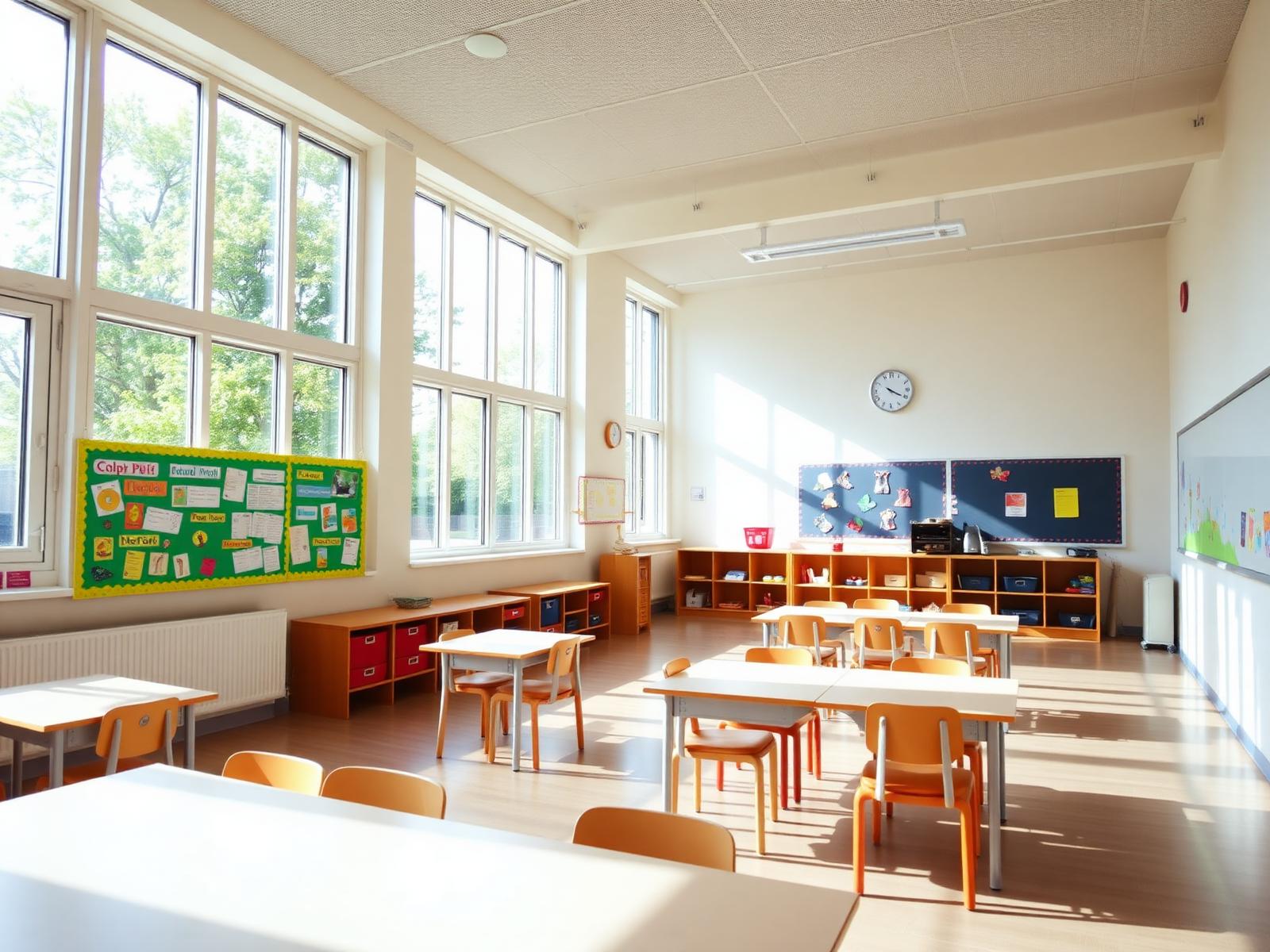
Why indoor air quality matters in schools
Indoor air is the medium in which learning happens. Pupils in the UK spend roughly 30 hours a week inside school buildings, often in classrooms that are smaller and more densely occupied than typical adult workplaces. Adults working with them — teachers, teaching assistants, kitchen staff — share the same air.
When ventilation is poor or pollution sources accumulate, the immediate effects show up as stuffiness, drowsiness, headaches, irritability and reduced concentration. Over longer periods, air quality interacts with respiratory health, sickness absence and the comfort of staff and visitors. None of these effects need to be dramatic to be educationally and operationally significant.
What shapes the air inside a school
Indoor air quality in any school is the product of four overlapping factors: how the building is constructed and ventilated, how the rooms are used, what happens inside them, and what enters from the outside.
- Ventilation — natural, mechanical or mixed, and whether it actually delivers fresh air to occupied spaces
- Occupancy — how many people are in a room, for how long, doing what
- Indoor sources — cleaning chemicals, paints, furniture, art materials, printers, cooking
- Outdoor air — traffic, school-run idling, nearby industry and seasonal pollution
- Moisture — damp, condensation and mould growth in vulnerable parts of the fabric
- Operation — whether systems run when rooms are in use and are properly maintained
The pollutants schools focus on
Not every pollutant matters equally in every school. Most credible school air-quality programmes focus on a core set that, taken together, gives a balanced picture of how the building is performing for its occupants.
Carbon dioxide is the most useful single indicator of how well a room is ventilated relative to its occupancy. Particulates (PM2.5 and PM10) tell you about combustion, traffic and indoor activities. Volatile organic compounds and formaldehyde reflect chemical exposure from materials and products. Nitrogen dioxide flags traffic-related outdoor air, and mould spores or moisture readings highlight damp issues. Temperature and humidity sit alongside as essential thermal-comfort context.
UK standards and benchmarks
Schools usually work to a small set of recognised references. Building Bulletin 101 (BB101) is the primary ventilation guidance for new and refurbished UK schools. CIBSE TM40 sets out indoor air quality for non-domestic buildings, BS EN 16798 is the European indoor environment standard, and WHO 2021 provides global air-quality guideline values. Together they let assessments express findings in terms decision-makers can compare and act on.
Assessing and improving the indoor environment
A typical improvement journey moves from understanding to evidence to action. Most schools start with an assessment, add targeted testing where needed, deploy short or long-term monitoring to confirm patterns, and then make a combination of operational and capital changes. This page links out to each of those services so you can pick the right entry point.
Frequently asked questions
What is school indoor air quality?+
It is the quality of the air inside classrooms, halls, offices and circulation spaces in a school. It is shaped by ventilation, occupancy, building materials, cleaning, outdoor air and the activities taking place. Good indoor air quality supports concentration, comfort and attendance; poor indoor air quality contributes to stuffiness, drowsiness, headaches and complaints.
Which pollutants matter most in schools?+
Carbon dioxide as a marker of how well a room is ventilated; fine particulates (PM2.5) from outdoor air, traffic and indoor activities; volatile organic compounds and formaldehyde from cleaning products, furniture and craft materials; nitrogen dioxide where buildings sit close to traffic; and mould spores in buildings with damp issues.
Is there UK guidance for indoor air quality in schools?+
Yes. Building Bulletin 101 (BB101) is the headline ventilation guidance for new and refurbished schools. CIBSE TM40 covers indoor air quality in non-domestic buildings, BS EN 16798 sets European indoor environment criteria, and WHO 2021 publishes global air-quality guidelines. Together they provide the benchmarks most school assessments work against.
Do schools need to monitor air quality continuously?+
Not always — but it is increasingly common. Many schools use a mix of CO₂ monitors in occupied rooms and periodic assessment or testing for the wider pollutant picture. Continuous monitoring is most valuable where rooms vary a lot, where complaints recur, or where ventilation upgrades need before-and-after evidence.
What can schools do quickly to improve indoor air quality?+
Open windows and doors at break times to flush rooms, check trickle vents are clear and unpainted, run mechanical ventilation to schedule, switch to lower-VOC cleaning regimes, address damp and mould promptly, and timetable high-occupancy rooms so they are not back-to-back without recovery time.
Ready to take a closer look at your school's air?
Tell us about your buildings and the rooms or year groups you're concerned about. A specialist will be in touch within one working day.