Why early-years settings deserve their own assessment
Early-years rooms are not simply smaller versions of primary classrooms. Occupancy density relative to floor area is typically high, ventilation systems are often a mix of opening windows and basic mechanical extract, and the daily routine includes activities — messy play, mealtimes, sleep periods, frequent cleaning — that all influence the indoor environment.
Operators are usually balancing several practical concerns at once: keeping rooms comfortable, managing temperature in winter without losing all the fresh air, controlling odours and damp, and reassuring parents that the environment is being looked after. A focused assessment helps make those decisions on evidence rather than guesswork.
Playrooms, activity rooms and quiet/sleep areas
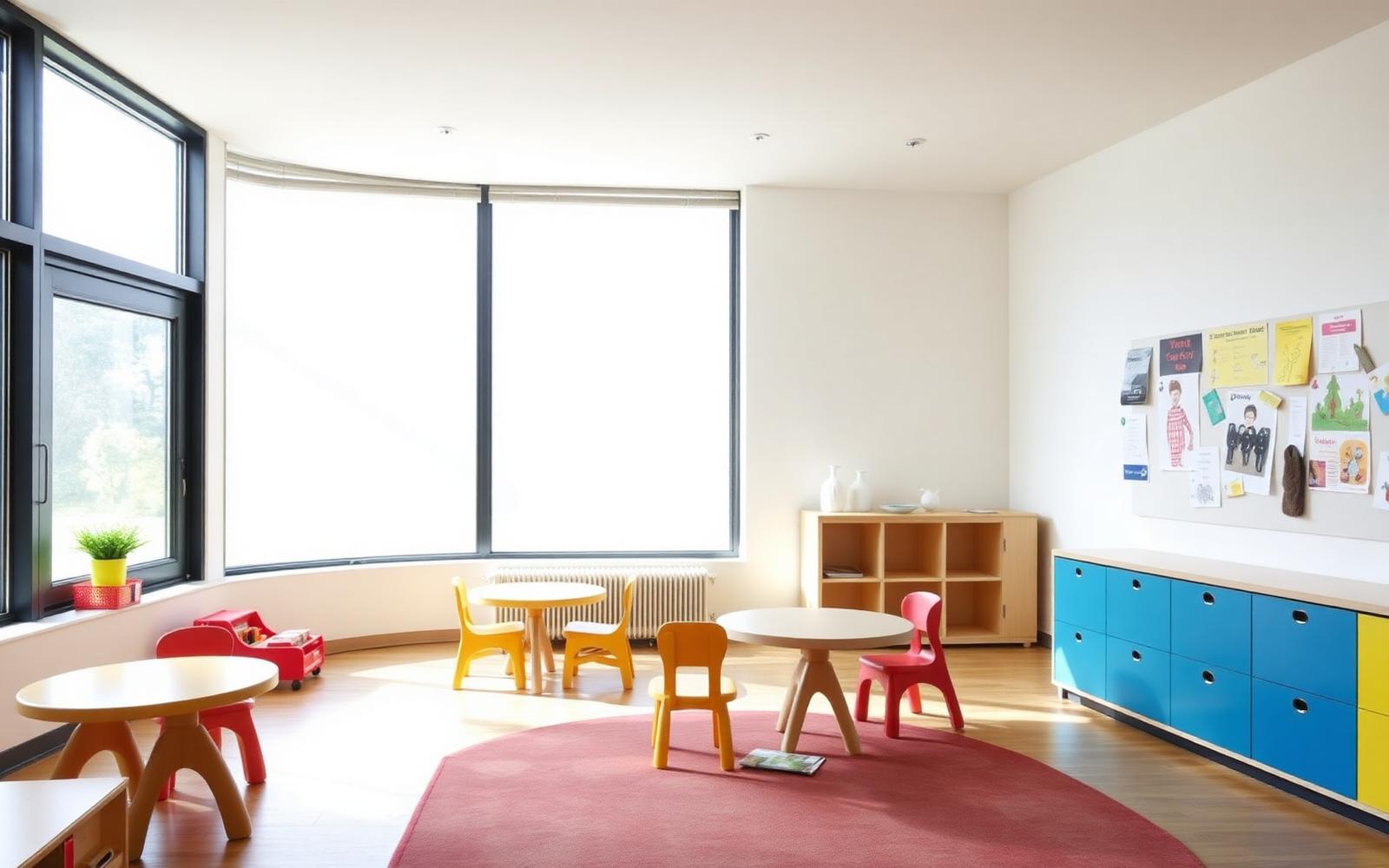
Each room type behaves differently. Main playrooms tend to be the busiest spaces and benefit most from ventilation monitoring. Activity or messy-play rooms see paint, glue, modelling material and frequent surface cleaning, all of which influence VOC and odour observations. Quiet and sleep/rest areas, where they exist, often have lower occupancy at any given moment but very long dwell times, making temperature and humidity comfort particularly relevant.
- Main playrooms — primary focus for CO₂ and ventilation review
- Activity / messy-play rooms — cleaning, materials and odour context
- Quiet or sleep / rest rooms — comfort and dwell-time considerations
- Shared circulation and entrance areas — ingress and routing
- Adjacent toilet and nappy-change facilities — extract performance only
Cleaning products, materials and finishes
Nurseries clean often, and for good reason. The aim is not to discourage cleaning — it is to understand which products and routines may be contributing to odours or short-term VOC peaks, and where simple substitutions or scheduling changes can reduce that contribution without compromising hygiene. Newly painted or refurbished rooms, recent flooring changes and new soft furnishings can also affect VOC readings and are noted during the visit.
Ventilation, CO₂, temperature and humidity
CO₂ is used as a practical indicator of how well a room is being ventilated relative to its occupancy at the time. It is not a pollutant of direct concern at typical indoor levels, but it tells us whether fresh air supply is keeping up with the number of people in the room. Temperature and relative humidity are tracked because both directly influence comfort and the conditions that allow condensation and mould.
Odours, damp, mould and refurbishment context
Persistent odours, recurring damp patches and visible mould are recorded during the walk-through. Where they appear, the assessment focuses on the likely moisture source — leaks, condensation, ventilation limitations or fabric defects — rather than only the visible symptom. Recent refurbishment, new flooring or new soft furnishings can also affect odour and short-term VOC observations and are noted in context.
Practical testing and monitoring approach
Most nursery assessments combine a structured walk-through with short-period environmental measurements across the rooms in scope. Where it adds value — for example to understand patterns across a typical week — longer monitoring can be arranged. The approach is agreed with the operator before the visit so it fits the daily routine of the setting rather than disrupting it.
Clear communication for nursery operators and facilities teams
Reports are written for the people who will act on them. Findings are described plainly, with practical recommendations that distinguish between immediate operational changes (for example ventilation routines), short-term maintenance items, and longer-term improvements. Where parents or staff need a summary explanation, a short, plain-English version can be included.
Suitable schools and settings
- Single-site nurseries reviewing classroom comfort and ventilation
- Nursery groups standardising assessment across sites
- Operators responding to parent or staff concerns
- Newly refurbished or extended nursery buildings
- Nursery provision within primary schools and academies
Frequently asked questions
Why is nursery air quality testing worth doing?+
Early-years rooms tend to have high occupancy density relative to floor area, frequent use of cleaning products, varied activities throughout the day and — in many settings — sleep or rest periods. Testing helps nursery operators understand whether ventilation, temperature, humidity and basic pollutant levels in those rooms are within sensible comfort and air-quality ranges, and where simple operational changes could help.
Does the assessment make any medical claims about the children?+
No. Nursery air quality testing is an environmental assessment of the indoor spaces and how they are operated. It does not diagnose, predict or rule out any health condition in any individual child or staff member. Where parents or staff have health concerns, those remain matters for medical professionals.
Which rooms are typically included?+
Usually the main playrooms, any quiet or sleep/rest rooms, the activity room or messy-play area where applicable, and shared circulation spaces. Kitchens, nappy-change areas and toilets are not normally the focus of an air-quality assessment but their ventilation is noted because it affects adjacent rooms.
Is the nursery disrupted during the visit?+
Sensors and measurements are non-intrusive. Visits can be arranged outside operating hours, during quiet periods, or alongside normal nursery activity depending on what the operator prefers. We will agree the approach with the nursery manager before the visit.
What do we receive afterwards?+
A written report covering the rooms assessed, the measurements taken, observations on ventilation and operation, and prioritised practical recommendations. Recommendations are written for nursery operators and facilities teams, not engineers — though more technical detail can be included where it is genuinely useful.
Ready to take a closer look at your school's air?
Tell us about your buildings and the rooms or year groups you're concerned about. A specialist will be in touch within one working day.