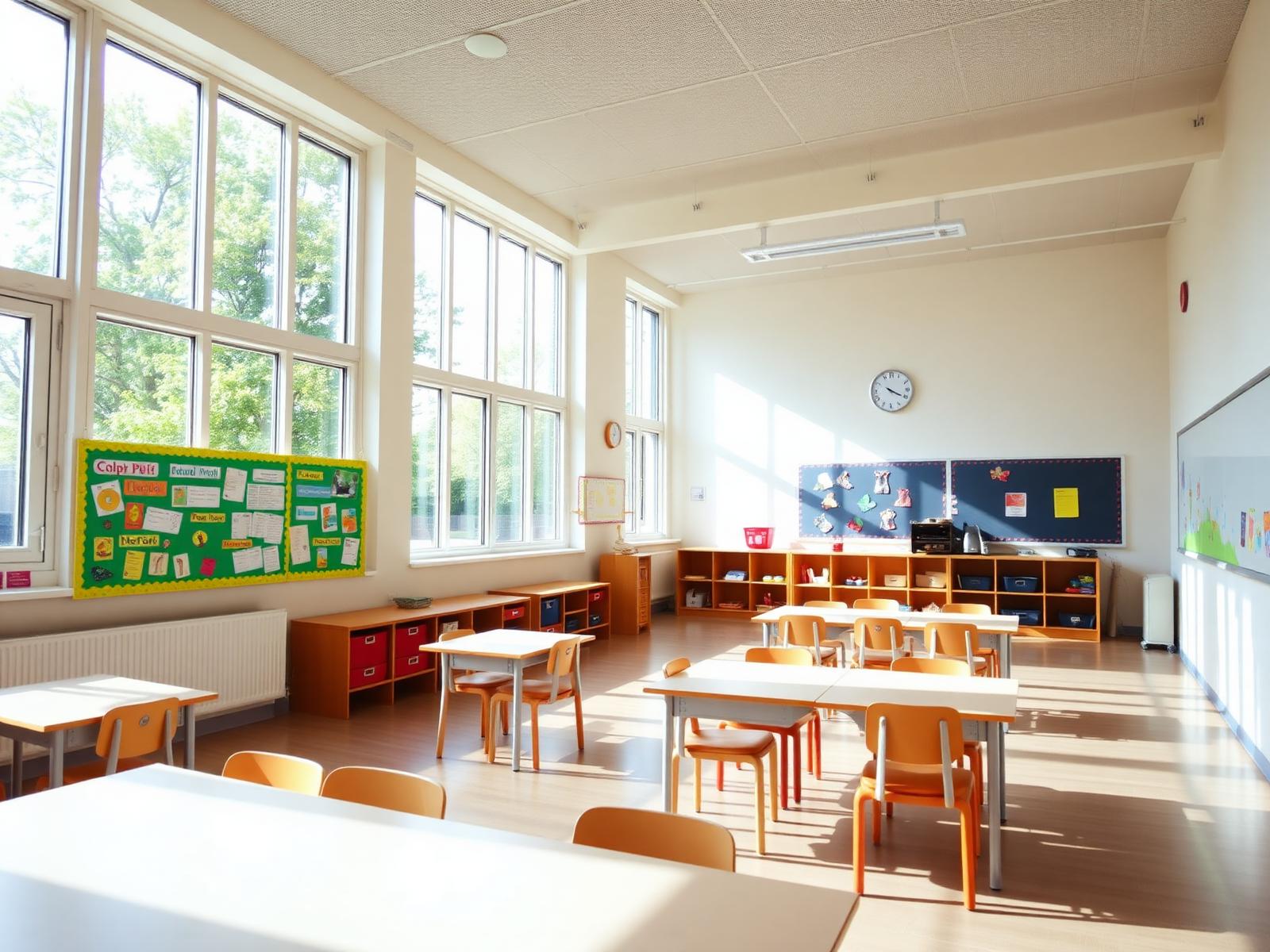
Classroom air and ventilation
Classroom air is the product of how a room is built, how it is ventilated, what is inside it and who is using it. Most UK classrooms rely primarily on natural ventilation — opening windows and trickle vents — with mechanical extract in toilets and sometimes mixed-mode systems in newer buildings. The headline question is simple: is enough fresh air reaching the room when it is full?
When ventilation is comfortably matched to occupancy, CO₂ stays moderate, the air feels fresh, temperatures stay within a workable range and pupils can concentrate. When it is not, stuffiness builds through a lesson, drowsiness creeps in and complaints rise — often before any monitoring picks the pattern up.
Occupancy and room use
How a classroom is used is as important as how it is built. The same room behaves very differently depending on class size, lesson length, whether it is taught back-to-back, whether breaks include real ventilation time, and what activity is going on (quiet reading vs. PE warm-ups vs. practical work).
Reviewing timetables — particularly which rooms are used most intensively, and where high-occupancy lessons run consecutively — is often the simplest improvement available, and costs nothing. It usually sits alongside small physical changes: making sure trickle vents are clear and unpainted, that windows can actually open the distance the design assumes, and that classroom doors are not propped or wedged in ways that interfere with airflow design.
CO₂ as a ventilation indicator
Carbon dioxide is the most useful single indicator of how well a classroom is ventilated for its occupancy. CO₂ does not need to reach dramatic levels to matter; sustained elevations through a teaching day are the more common pattern in UK classrooms, and they correlate well with subjective stuffiness and reduced concentration.
Continuous monitoring in occupied teaching spaces — even using a small number of well-placed monitors that rotate around the estate — produces the evidence base that supports both day-to-day operational changes and the case for any capital work.
Temperature, particulates and VOC sources
Temperature interacts directly with ventilation. In winter, the cost of opening windows is heat loss and draughts; in summer, classrooms can overheat on still days, especially in upper floors and south-facing rooms. Both extremes affect comfort and attention, and both have practical mitigations short of capital work.
Fine particulates (PM2.5) and volatile organic compounds reflect outdoor air, cleaning regimes and the materials inside the room. Art, DT and science spaces deserve a specific look — they tend to have more concentrated sources and benefit from targeted ventilation strategies rather than treating every classroom the same.
Practical routines and improvements
Most classrooms benefit from a short set of routines kept consistently rather than dramatic changes done occasionally. Flushing rooms at break and lunch, leaving trickle vents open during the school day, scheduling high-occupancy lessons with recovery time, and reviewing cleaning chemistry are all low-cost improvements that compound across a week.
Capital changes — window refurbishment, ventilation upgrades, mechanical plant — sit behind that operational layer and are usually best planned with monitoring data rather than ahead of it.
When monitoring or assessment helps
Monitoring or formal assessment becomes valuable when complaints recur, when timetables and room use have changed materially, when refurbishment is being planned, or when the school wants a robust before-and-after picture. The right entry point depends on what you already know — a survey is usually a good starting point if the picture is unclear, while CO₂ monitoring suits schools where the question is specifically about ventilation.
Frequently asked questions
What makes a classroom 'healthy'?+
A healthy classroom is comfortable, well-ventilated and clean across a typical teaching day, with conditions that do not interfere with concentration or attendance. In practical terms that means fresh air keeping CO₂ within reasonable bounds, temperature in a comfortable range, low background levels of particulates and VOCs, and routines that keep those conditions stable as the room is used.
How does occupancy affect classroom conditions?+
Occupancy is one of the biggest drivers. A classroom with 30 pupils generates significantly more CO₂, heat and moisture than the same room with 12. That is why ventilation that copes well in a small group can struggle in a full class, and why timetabling — particularly back-to-back lessons in the same room — matters as much as the building itself.
Is opening windows enough?+
For many UK classrooms it is a large part of the answer, particularly in milder months. Windows and trickle vents are the main fresh-air route in most naturally ventilated schools. They work less well in cold weather (where draughts and energy loss push staff to close them) and where outdoor noise or pollution is high. In those cases, scheduled flush ventilation and mechanical ventilation play a bigger role.
When should a school monitor classroom CO₂?+
CO₂ monitoring is most useful in rooms that vary a lot in occupancy, where there have been complaints about stuffiness, where ventilation upgrades are being planned or already underway, or where the school wants ongoing evidence rather than a one-off snapshot. It is the simplest single indicator of how well a classroom is ventilated relative to the people in it.
What about particulates and chemicals?+
Fine particulates (PM2.5) and volatile organic compounds vary by classroom. Outdoor PM2.5 follows traffic and seasonal patterns; indoor sources include cleaning, craft materials and furniture. Most schools address them through cleaning specifications, attention to art and DT rooms, sensible use of windows during high outdoor pollution episodes, and targeted testing where conditions warrant it.
Ready to take a closer look at your school's air?
Tell us about your buildings and the rooms or year groups you're concerned about. A specialist will be in touch within one working day.