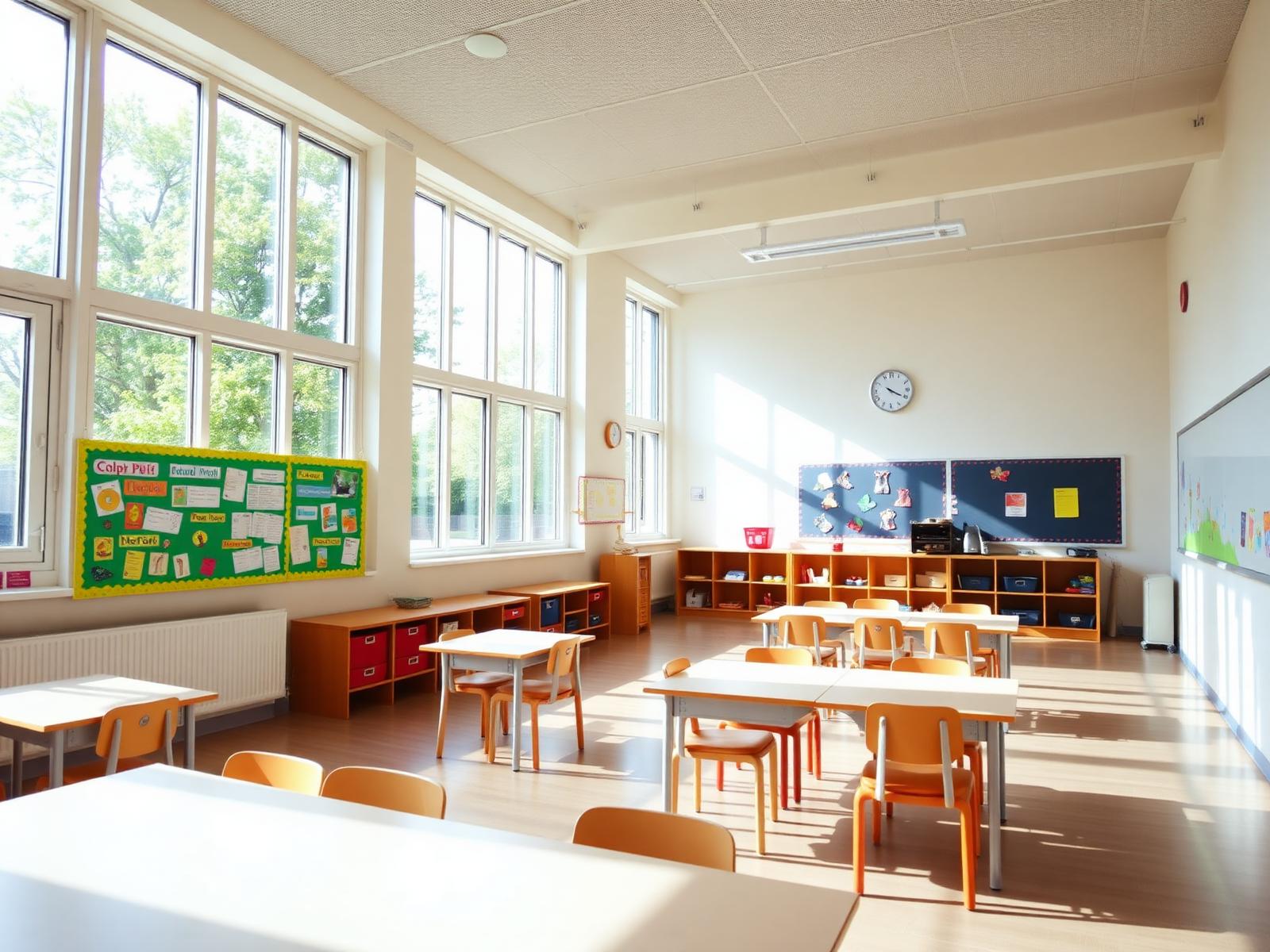
Why classroom-level air quality matters
A typical UK classroom packs 25–32 occupants into a relatively small volume, often for an hour at a time, sometimes back-to-back. The same room may be used differently across the day — quiet reading, group work, music, science — each with a different demand on the air.
When ventilation cannot keep up, CO₂ rises, the room feels warm and stuffy, and other pollutants accumulate alongside. Pupils get drowsy, staff get headaches, and the lesson loses pace. Conversely, well-ventilated classrooms feel fresh, support concentration and are quieter in their effects on attention and behaviour.
Common conditions that affect classroom air
Classroom air quality is almost always shaped by a combination of factors rather than a single problem. The most common contributors are familiar to any experienced school estates lead.
- High occupancy in a small or partitioned room
- Restricted or unused window opening (safeguarding, weather, noise)
- Mechanical ventilation running below useful flow
- Carpets, soft furnishings and displays trapping dust and moisture
- Cleaning chemicals applied during occupied hours
- Newly installed furniture or whiteboards releasing VOCs
- Damp, condensation or mould in vulnerable walls and ceilings
- Traffic-derived particulates entering through windows and intakes
Monitoring and improving classroom conditions
An effective approach starts by understanding which classrooms perform well and which struggle. Targeted measurement of CO₂, PM2.5, temperature and humidity across a representative set of rooms reveals patterns that whole-school averages cannot.
From there, improvements typically combine operational changes (ventilation operation, timetabling, cleaning regimes), short-term studies for specific rooms, and capital actions where the building genuinely cannot deliver fresh air without intervention. Continuous monitoring then verifies that the improvements work in practice across seasons.
What we measure at classroom level
- • CO₂ — ventilation against occupancy
- • PM2.5 — fine particulate exposure
- • Temperature and relative humidity
- • TVOC — chemical exposure indicator
- • Optional: formaldehyde, mould spores, NO₂
- • Occupancy and operation notes
What schools do with the data
- • Identify priority rooms for attention
- • Adjust ventilation operation and timetabling
- • Inform cleaning and refurbishment choices
- • Evidence business cases for capital work
- • Respond credibly to staff and parent queries
- • Track improvement over terms and years
Suitable schools and settings
- Primary and secondary classrooms
- Early-years and nursery rooms
- Science labs, art and DT studios
- Music, drama and SEND teaching spaces
- Sixth-form and FE college teaching rooms
- Independent school teaching spaces
- Refurbished classrooms needing validation
- Modular and temporary classroom buildings
Frequently asked questions
What affects air quality inside a classroom?+
Occupancy, room volume, ventilation, cleaning, furniture and materials, outdoor air entering through windows or intakes, and the activities taking place — from quiet reading to art, science or PE warm-ups. Each of these contributes a different mix of CO₂, particulates, chemicals or moisture.
Why focus on individual classrooms rather than the whole school?+
Air quality varies sharply room by room. Two classrooms in the same building can perform very differently depending on aspect, opening windows, occupancy and use. Whole-school averages tend to mask the rooms that actually need attention.
Can classroom air monitoring help with staff and parent concerns?+
Yes. Having room-level data lets schools respond credibly to concerns about stuffiness, headaches, mould or dust, with measurable evidence rather than impressions. It also helps demonstrate that improvements have worked.
Are CO₂ monitors enough for classroom air quality?+
CO₂ is the single best ventilation indicator, but it does not measure particulates, chemicals or moisture. For a full picture, classroom monitoring or testing should include PM2.5, temperature and humidity at minimum, with TVOC and formaldehyde added where there are material or refurbishment concerns.
What is a sensible starting point for a classroom air-quality programme?+
Pick a representative set of rooms (different aspect, age group and ventilation type), measure them properly for one to four teaching weeks, interpret the results against UK benchmarks, and use that to design the right combination of operational changes, monitoring and capital work.
Ready to take a closer look at your school's air?
Tell us about your buildings and the rooms or year groups you're concerned about. A specialist will be in touch within one working day.