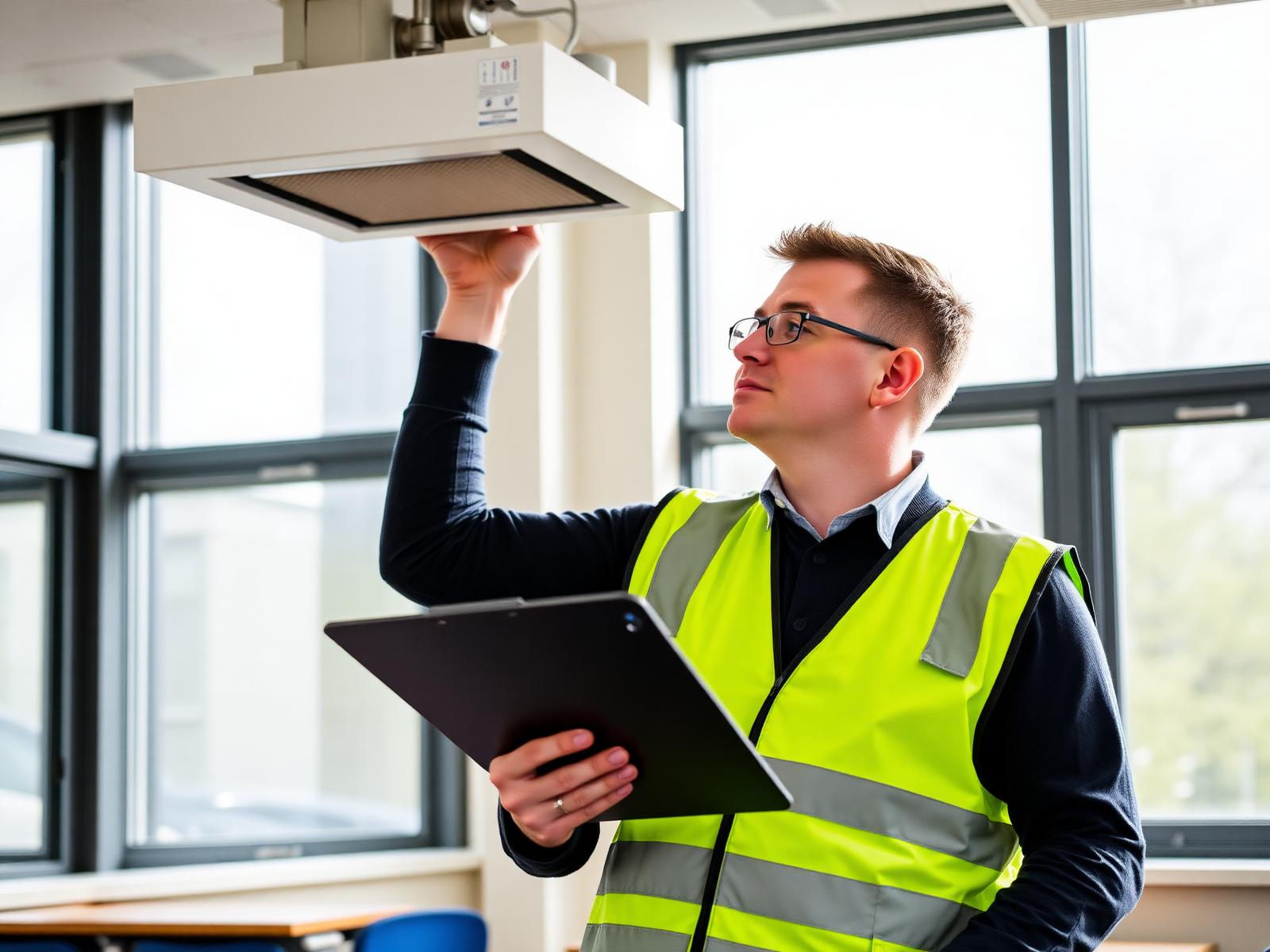
Ventilation in new and existing educational buildings
New and refurbished school buildings are generally designed against current building regulations and the relevant school ventilation guidance. In England, Building Bulletin 101 is the most widely referenced document for ventilation, thermal comfort and indoor air quality in schools; equivalent or supplementary guidance applies in other UK jurisdictions and at project level.
Existing buildings were designed against the standards in place at the time. They are not automatically required to be retrofitted to current guidance, but general duties to maintain reasonable indoor conditions still apply, and significant works or change of use can bring current guidance into scope.
Natural, mechanical and mixed-mode systems
Schools commonly use openable windows for natural ventilation, mechanical ventilation (sometimes with heat recovery) in modern or deep-plan spaces, and mixed-mode designs that combine the two. Each approach has different controls, maintenance needs and failure modes. The right balance is project-specific and depends on building geometry, acoustics, security, energy and the way rooms are actually used.
Design versus day-to-day operation
Compliance with design guidance at handover is not the same as adequate ventilation in everyday use. Window-opening behaviour, mechanical control settings, filter condition, occupancy changes and timetabling all influence the air a classroom actually receives. A building that performed well at commissioning can drift if these are not maintained or reviewed.
Occupancy and room use
Classroom occupancy varies considerably by year group, lesson and timetable. Rooms used for assemblies, drama, music or sport face different loads from a typical teaching classroom. Practical spaces — design and technology, art, science preparation — may also involve specific pollutant sources that need to be considered alongside general ventilation. Assessments and decisions should be informed by how a room is actually used, not only its design intent.
CO₂ as an operational indicator, not a complete compliance test
CO₂ is widely used in schools as an indicator of ventilation adequacy relative to occupancy. Rising CO₂ during lessons points to ventilation that may not be keeping up with the room's load; well-ventilated rooms generally show clearer resets between lessons. CO₂ is a strong operational signal but does not on its own confirm regulatory compliance, replicate commissioning measurements or replace formal assessment when one is needed.
Maintenance and control settings
Mechanical systems depend on planned maintenance — filter changes, fan and damper checks, control reviews — to perform as designed. Natural ventilation depends on functioning trickle vents, openable windows that staff are willing to use, and clear routines for opening and closing them. Recording maintenance and control changes makes it easier to interpret monitoring data later.
Refurbishment and change-of-use considerations
Refurbishment projects typically trigger a fresh look at ventilation against current guidance, particularly where the room's function or occupancy is changing. Conversions of existing space — for example, converting a storeroom into a teaching room, or splitting a hall — can change the ventilation requirement substantially even when the visible work appears modest.
When a ventilation assessment may be appropriate
A ventilation assessment may be appropriate where complaints persist, where conditions in occupied rooms are unclear, where a refurbishment or change-of-use is planned, where occupancy has increased, where post-installation performance needs to be verified, or where a MAT or local authority wants a consistent baseline across an estate. A proportionate assessment scopes the question before recommending physical works.
Suitable schools and settings
- Schools planning refurbishment or change of use
- MATs baselining ventilation performance across sites
- Schools responding to ventilation-related complaints
- Estates teams reviewing day-to-day operation of existing systems
Frequently asked questions
Is there one ventilation regulation that covers all UK schools?+
No single regulation covers every scenario. Ventilation in new and refurbished educational buildings is shaped primarily by building regulations and the relevant school ventilation design guidance (Building Bulletin 101 in England and equivalents elsewhere). Day-to-day operation also engages workplace health and safety duties. The applicable requirements depend on the building, the project and the circumstances.
Does CO₂ monitoring prove a school meets ventilation requirements?+
CO₂ is a useful operational indicator of ventilation adequacy relative to occupancy, but it is not a complete compliance test in itself. It tells you how a room is performing in use; it does not confirm design compliance, replicate commissioning measurements or replace formal ventilation assessment where that is appropriate.
Do existing schools have to retrofit ventilation to current guidance?+
Not automatically. Current design guidance applies primarily at new build, refurbishment or change-of-use. Existing buildings continue to operate under the standards in place when they were built, alongside general duties to provide reasonable indoor conditions. Schools planning works should check what guidance applies to that project.
When is a ventilation assessment appropriate?+
Common triggers include persistent complaints, planned refurbishment, change of use, additions to occupancy, recurrent overheating, condensation issues, post-installation review of a new system, or estate-wide baselining across a MAT. A proportionate assessment scopes the question before committing to capital works.
Is this page legal advice?+
No. This is general information to help school leaders and estates teams understand the ventilation guidance landscape. Specific regulatory questions should be discussed with appropriately qualified advisers and, where relevant, the local building control authority.
Ready to take a closer look at your school's air?
Tell us about your buildings and the rooms or year groups you're concerned about. A specialist will be in touch within one working day.