Ventilation

Why Classroom Ventilation Matters

How fresh air supply, occupancy and ventilation work together in UK classrooms — and what practical operation looks like day to day.

Published 8 min read SchoolAirQuality.uk
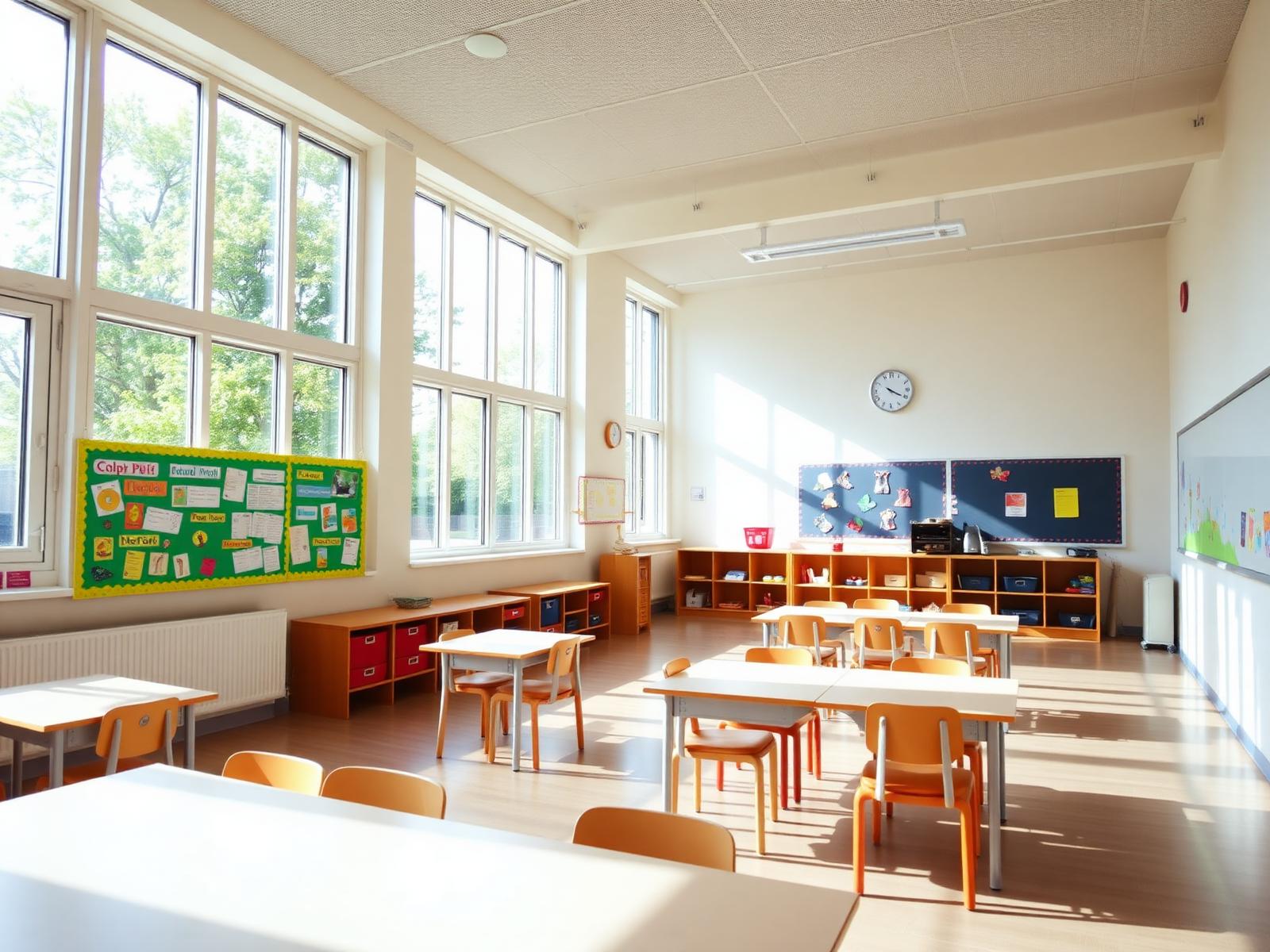
Diagrammatic airflow lines moving through a daylit UK classroom interior

What classroom ventilation actually does

Ventilation is the controlled exchange of indoor air for fresh outdoor air. In a classroom it has two practical jobs: bringing fresh air in to dilute the things produced indoors — people, cleaning products, materials, occasional cooking or activity-related emissions — and removing the warm, moist, used air that builds up over the course of a lesson.

Most UK classrooms rely on a mixture of opening windows, vents, and in newer or refurbished buildings, mechanical ventilation. None of these are self-managing. Each depends on how the room is operated through the day: when windows are opened, how systems are set, and whether vents are obstructed by furniture, displays or weather sealing.

Why occupancy matters more than room size

A classroom holding thirty pupils for an hour is a very different ventilation problem from the same room used by a small group for ten minutes. Each person exhales a steady stream of warm, humid air containing CO₂. The amount of fresh air a room needs depends much more on how many people are in it, and for how long, than on its physical dimensions.

This is why two rooms of identical size can perform very differently: one used by a full class all morning, the other used for occasional small-group teaching. Ventilation planning that ignores occupancy patterns tends to oversimplify the picture.

CO₂ as a practical indicator

CO₂ is widely used as an indicator of how well a room is being ventilated relative to the number of people in it. It is not, at typical indoor levels, a pollutant of direct concern itself — but because people are the dominant source indoors, rising CO₂ tells you fresh-air supply is not keeping up with occupancy.

Looking at CO₂ readings is less about chasing a single number and more about reading the pattern: how quickly the room reaches its peak, how high that peak goes, and whether it falls back during breaks and after school. A flatter pattern usually means ventilation is keeping pace; a steeply rising one usually means it is not.

Natural and mechanical ventilation in practice

Natural ventilation — opening windows, trickle vents, high-level openings — is simple and free to run, but its performance depends on the weather, the user, and the building. In cold weather, classrooms often close everything down to stay warm, which directly cuts the fresh air supply.

Mechanical ventilation (supply, extract, or balanced systems) is more predictable but only when it is correctly commissioned, maintained, and actually switched on during occupied hours. It is common to find systems that exist on paper but are not running, or are running at the wrong times, or are working against a closed damper somewhere upstream.

What good day-to-day operation looks like

Practical operation is unglamorous but powerful. Opening windows briefly between lessons (a few minutes can shift a lot of air), keeping vents unobstructed, scheduling mechanical systems to actual occupancy, and checking that systems are still doing what they were designed to do, all matter more than any one technical specification.

For schools that want a clearer picture, an independent school ventilation assessment looks at how the building is performing in practice rather than how it was designed in theory. Where complaints are concentrated in particular rooms, a short period of CO₂ monitoring often clarifies the issue quickly.

Next step

Want this looked at in your school?

Independent UK school air quality consultants. We scope the question, do the work and explain the findings in plain language.