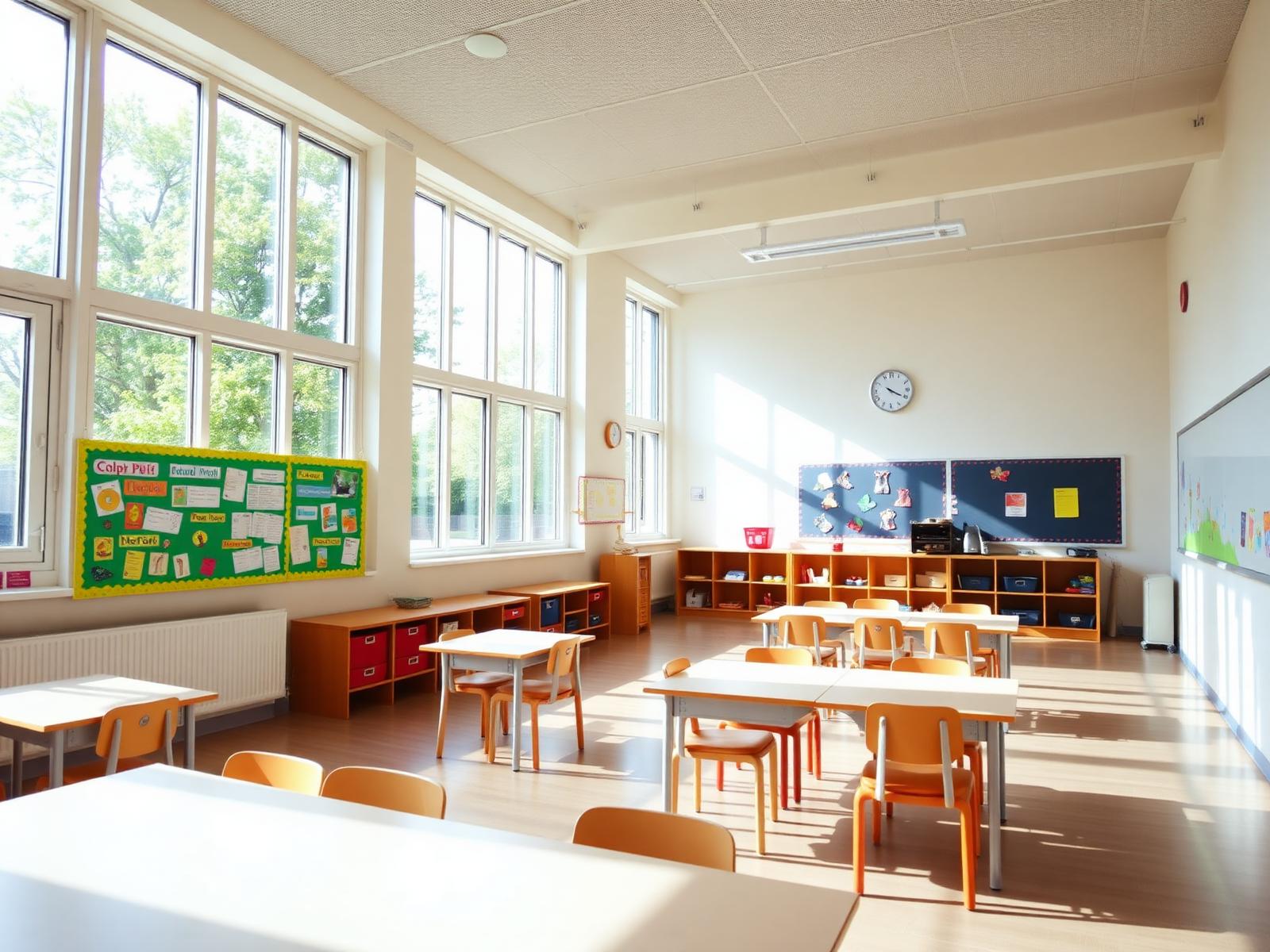
Framing the topic honestly
Wellbeing is shaped by far more than building conditions. Sleep, nutrition, relationships, workload and teaching all matter. Environmental work cannot and should not promise to treat or prevent specific health conditions, and we are careful not to imply it can. What it can do is reduce or remove a set of physical distractions — stuffiness, overheating, persistent odours, draughts — that demonstrably interferes with how comfortable a room is to use.
Approaching the topic this way keeps the conversation credible with staff, pupils and parents, and avoids the over-promising that tends to follow specific health claims attached to indoor air work.
Environmental comfort and the classroom experience
Comfort in a classroom is the product of several overlapping factors: how fresh the air is, the temperature, humidity, surface and radiant temperatures, the presence of odours, lighting and acoustic conditions. The first three sit at the centre of most environmental assessments; acoustic and lighting conditions are usually handled separately but provide important context when complaints recur.
When these factors stay within reasonable bounds across a teaching day, the room fades into the background. When they drift outside, attention is taken up by managing them — pupils fidget, windows are opened and closed, jumpers come on and off — and that low-level distraction is the operational cost.
Fresh-air perception and odours
How fresh a room feels is one of the most useful subjective measures available. It is not a substitute for measurement, but it is a strong leading indicator that something is worth looking at. Sustained complaints about stuffiness, headaches at the end of the day or rooms 'feeling closed in' typically have a real underlying pattern.
Odours have a similar role. Persistent or recurring odours — chemical, biological, food-related, drainage — are worth logging and investigating rather than masking. Most are tractable once the source is identified, and they tend to drive disproportionately strong complaints because smell is hard to ignore.
Temperature and overheating
Temperature is the single most reliable predictor of physical complaints in UK classrooms. Cold rooms generate one pattern (closed windows, poor ventilation, drowsiness later in the lesson). Overheating in summer generates another (fatigue, irritability, reduced participation). Both have practical mitigations and both interact with ventilation.
Rooms on upper floors and with significant glazing — particularly south- and west-facing — are typical hotspots for summer overheating. Reviewing solar shading, ventilation strategy and timetabling for those rooms often delivers more than treating the whole estate uniformly.
Staff observations and environmental complaints
Teachers and site staff usually know which rooms are problematic long before any measurement is taken. Capturing that knowledge structurally — a simple log of which rooms, what time, which activities, what the complaint was — converts informal awareness into something that can be investigated and acted on. It also creates a baseline against which changes can be judged.
A consistent pattern across a small number of rooms is almost always more useful than a one-off observation across many. The aim is not to record everything, but to surface the real concentrations of concern.
Practical investigation approach
Where complaints recur, a structured investigation is usually more effective than reacting case-by-case. That typically means a short site visit focused on the rooms in question, a check of the obvious operational factors (ventilation use, vents clear, temperature in range, cleaning regime), short-term monitoring where helpful, and a written summary that the school can use to decide on next steps. Capital options follow that picture rather than leading it.
Frequently asked questions
What does 'classroom wellbeing' mean in environmental terms?+
It refers to how the room feels to use across a teaching day — whether the air feels fresh, the temperature is comfortable, there are no persistent odours and pupils and staff are not distracted by physical conditions. Environmental work cannot promise to treat or prevent specific health conditions, but consistent indoor conditions remove a category of distractions and complaints that interferes with the classroom experience.
Why does fresh-air perception matter?+
How fresh a room feels is one of the most reliable subjective indicators staff and pupils have. It tracks reasonably well with ventilation, occupancy and temperature, and complaints about stuffiness usually point to a real underlying pattern worth investigating — even if no single measurement is dramatic on its own.
Can air quality work improve concentration?+
Concentration is influenced by many factors, including sleep, nutrition, teaching, classroom layout and individual differences. Environmental conditions are one input among those. What environmental work can do is remove conditions that demonstrably interfere with concentration — stuffiness, overheating, persistent odours — so they stop being part of the picture. It is honest to frame the work that way rather than as a single-issue fix.
How should schools handle recurring classroom complaints?+
A structured approach helps. Log when and where complaints occur, look for patterns by room, time of day or activity, check the obvious operational factors first (ventilation in use, vents clear, temperature in range), and bring in a more formal assessment if the picture stays unclear. That sequence keeps the response proportionate and avoids jumping to capital work before the underlying pattern is understood.
Is wellbeing-focused work different from a standard assessment?+
The measurements overlap, but the framing differs. A wellbeing-focused investigation pays more attention to subjective complaints, occupancy patterns and the experience of staff and pupils, and uses that to direct where to measure. A standard assessment is more building-led. In practice the two are often combined.
Ready to take a closer look at your school's air?
Tell us about your buildings and the rooms or year groups you're concerned about. A specialist will be in touch within one working day.