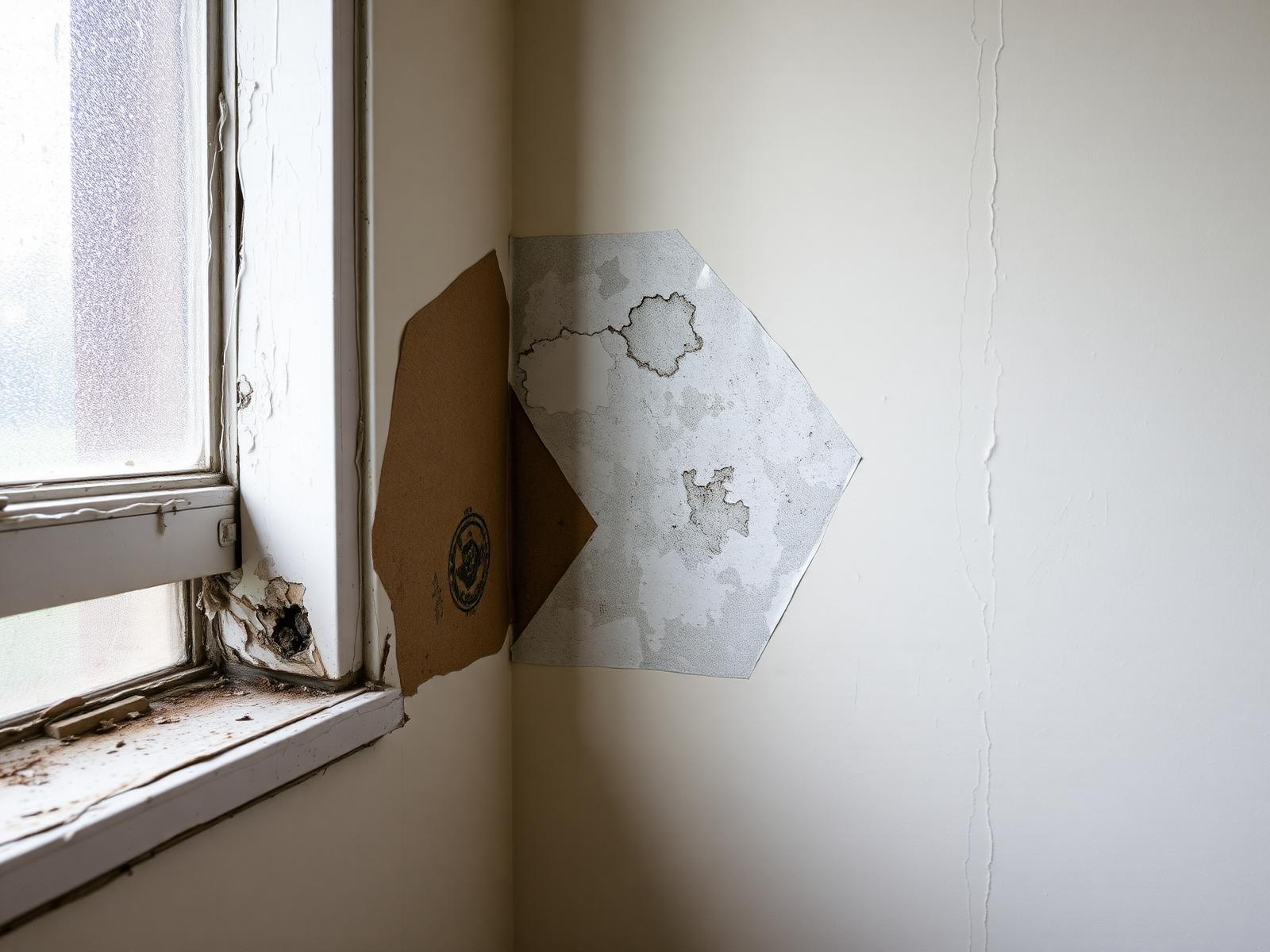
Common moisture and damp triggers
Mould requires moisture to grow. In UK school buildings the relevant moisture sources are usually one of a small number of categories, and most investigations narrow to one of them quickly.
- Roof, gutter and rainwater goods leaks affecting upper floors and ceilings
- Plumbing leaks behind walls, under floors and around fittings
- Condensation on cold surfaces in poorly ventilated rooms
- Rising damp and penetrating damp in older parts of the estate
- Failed pointing, sealants and external building fabric
- Inadequate ventilation in changing rooms, kitchens and toilets
- Cold bridges in upgraded or refurbished areas
Leaks, condensation and ventilation
These three account for the majority of damp findings in UK schools. Leaks present as wet, often localised damage and follow the gravity path of the water. Condensation appears on cold surfaces — windows, external walls, behind furniture against external walls — and tends to track with cold spells and high indoor humidity. Inadequate ventilation makes both worse by allowing moisture to accumulate.
Musty odours
Persistent musty or earthy odours are a useful early signal. They often appear before visible mould, particularly in stores, cupboards and behind furniture or fixed cabinetry. Logging where and when odours occur — and how they correlate with weather, ventilation and room use — is a useful first step that frequently narrows the investigation before any sampling is needed.
Visual inspection and moisture investigation
A competent investigation starts with a structured visual walk-through of the affected areas. That includes surface inspection, photography, and moisture measurement using handheld meters and, where useful, thermal imaging. The aim is to identify the moisture source and the pathway, not just the visible mould. Treating the visible mould without addressing the source rarely holds.
Role and limits of airborne sampling
Airborne spore sampling characterises what is reaching occupants in the room being assessed. It is a valuable input when visual inspection alone is not enough, when post-remediation verification is needed, or when comparison with outdoor spore levels would inform interpretation. It is not a diagnostic test for any specific health condition, and we are explicit about that in any reporting.
Sampling alone, without an inspection of the moisture source, is generally not advisable. The same air sample can mean very different things depending on what is going on in the room and the building.
Room comparison and outdoor reference
Indoor airborne spore concentrations are most usefully interpreted alongside outdoor samples taken at the same time. Outdoor spore levels vary seasonally and with weather; indoor levels exceeding outdoor levels by a meaningful margin, or showing a markedly different species profile, suggests an indoor source rather than ambient ingress.
Remediation planning and post-remediation monitoring
Remediation focuses on the moisture source first and the visible mould second. Reports prioritise actions accordingly and identify items the school can plan into routine maintenance versus those that need specialist remediation. Where remediation is substantial — for example significant areas affected, or after a major leak — a post-remediation air sample provides a defensible record that the work has had the intended effect.
Suitable schools and settings
- Schools with recurring damp or condensation issues
- Buildings recently affected by leaks or flooding
- Rooms with persistent musty odours
- Estates teams verifying remediation outcomes
Frequently asked questions
When is airborne mould testing useful in a school?+
It is most useful where there are recurring damp issues, persistent musty odours, visible mould in or near occupied rooms, or post-remediation reassurance is needed. It is not usually the first step — a visual and moisture inspection of the affected areas comes first and frequently identifies the problem without further sampling.
Does an airborne mould test diagnose health conditions?+
No. Airborne mould testing is an environmental measurement of spores in indoor air. It does not diagnose or rule out any specific medical condition and we do not present it that way. Where individual health concerns exist, they are matters for medical professionals, not air-quality contractors.
What is the difference between visual inspection and airborne sampling?+
Visual inspection identifies what is visible — damp, staining, condensation patterns, mould growth on surfaces — and combines it with moisture readings to locate the source. Airborne sampling measures spore concentrations in the air. The two answer different questions: visual inspection identifies the problem; airborne sampling characterises what is reaching occupants.
How is airborne sampling done?+
Most commonly with a calibrated air sampler that collects spores onto a culture or analysis medium over a defined sampling period. Samples are analysed at a laboratory and reported as spore concentrations by type. Indoor results are usually compared with outdoor samples taken at the same time, because outdoor levels set a useful reference baseline.
What follows a mould investigation?+
Typical outputs include a written summary of the inspection, any sampling results, the most likely moisture sources, prioritised remediation steps and — where appropriate — a recommendation for follow-up sampling after remediation. Remediation itself is usually a separate contracted activity carried out by qualified specialists.
Ready to take a closer look at your school's air?
Tell us about your buildings and the rooms or year groups you're concerned about. A specialist will be in touch within one working day.