What formaldehyde is
Formaldehyde is a volatile organic compound that occurs naturally at low levels in the environment and is widely used in materials and products found in modern buildings. In schools the relevant sources are almost always indoor: adhesives in composite wood, finishes on flooring and cabinetry, some textiles and a smaller number of cleaning products.
Because it is consistently associated with new materials, formaldehyde concentrations indoors typically peak after installation and decline over weeks or months as off-gassing slows. That time pattern is central to interpreting any single test result.
Building materials and furnishings
Common school sources include:
- MDF and chipboard furniture (cabinets, storage, classroom units)
- Composite-wood flooring and underlay systems
- Adhesives used in flooring, panelling and joinery
- Some laminates, melamine surfaces and finishes
- New cabinetry and built-in storage installed during refurbishment
- Certain textiles and curtains in classrooms and halls
New fit-out and refurbishment
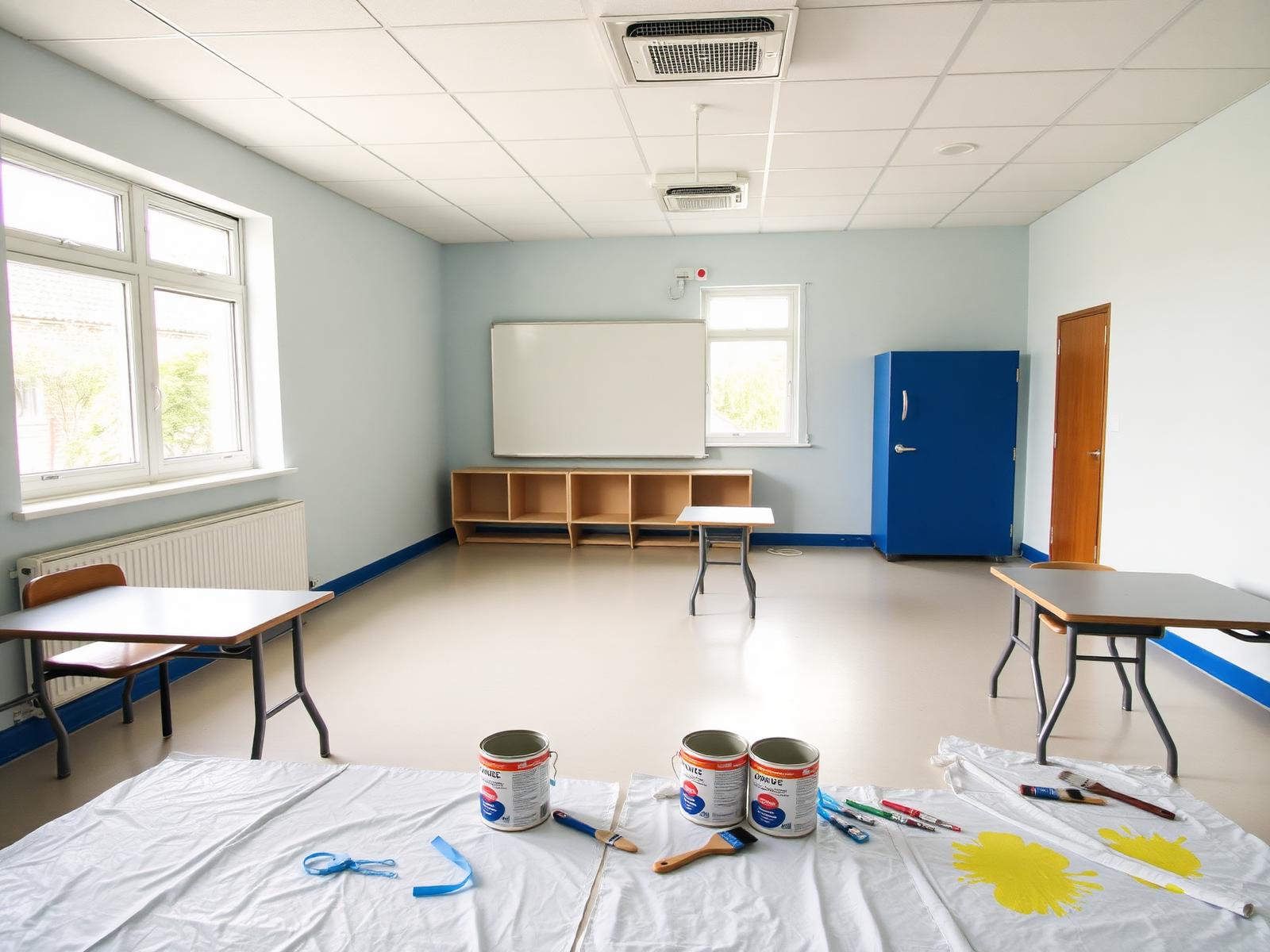
The most reliable trigger for formaldehyde concerns in a UK school is recent fit-out or refurbishment. Newly fitted classrooms, libraries and offices typically see elevated formaldehyde for a period after handover, particularly if rooms have been unoccupied with ventilation switched off during the works. The size and duration of that elevation depends on what was installed, how much air change the room sees, and how the room is operated immediately post-handover.
Testing is usually most informative in the early weeks of reoccupation, where the result will most directly inform decisions about ventilation, scheduling and any further investigation.
Sampling approach
Two sampling methods are commonly used. Passive samplers — small, low-disturbance devices placed in the room for a defined period — provide a time-weighted average concentration suitable for most indoor air questions. Active sampling, using a pump and sampling cartridge, is used when a shorter, more time-specific result is needed. Samples are analysed at a laboratory; in this report we describe the method used and the analysis applied, without inventing accreditations or laboratory names.
Interpretation and source investigation
Results are interpreted against published guideline values, including those from the WHO and CIBSE TM40 frameworks, and against the room's context — time since fit-out, ventilation regime, occupancy, and other conditions that fall within the sampling period. A single reading does not constitute compliance with any specific standard and is not a substitute for ongoing management; what it does is identify whether further action, additional sampling or revised operational practice is warranted.
Where elevated levels are confirmed, source investigation focuses on the most likely contributors identified during the site walk-through — typically the most recently installed materials in the room.
Ventilation and material management
Practical responses combine ventilation (using mechanical systems to specification, opening windows where appropriate, scheduling flush periods at the start of the day) with material management (allowing newly installed furniture to off-gas in well-ventilated areas before placing it in occupied classrooms, ensuring drawers and units are open during initial weeks). Capital changes — replacement of specific items, modification of ventilation — sit behind that operational layer and should be informed by data rather than assumption.
Suitable schools and settings
- Schools recently refurbished or fitted out
- Rooms with new composite-wood furniture or flooring
- Specific rooms with chemical odour complaints
- Estates teams responding to staff concerns post-handover
Frequently asked questions
What is formaldehyde and where does it come from in schools?+
Formaldehyde is a volatile organic compound used in adhesives, composite wood products, some textiles and a range of finishes. In schools, the most common sources are recently installed furniture, flooring, cabinetry and composite wood boards used in refurbishment or fit-out. Some cleaning products contain formaldehyde-releasing chemistry.
When does formaldehyde testing make sense?+
It is usually appropriate after recent refurbishment or new fit-out, when complaints reference a sharp or chemical odour, where new composite-wood furniture or flooring has been installed, or where targeted reassurance is needed before reopening a room. Routine formaldehyde testing in the absence of a trigger is rarely necessary.
How is formaldehyde sampled?+
Sampling typically uses passive samplers placed in the affected rooms for a defined period, or active pumped sampling where a shorter, time-specific result is needed. Samples are analysed by a laboratory and the result is reported as a concentration in air over the sampling period.
What does the result mean?+
Results are interpreted against published guideline values (such as those from WHO and CIBSE TM40) and against the context of the room — when it was sampled, how long since fit-out, ventilation in use and so on. A single result is not a compliance certificate; it is one input into a wider assessment.
What follows a high reading?+
Typical responses combine ventilation review (running mechanical systems, opening windows, scheduled flush), management of the suspected source (allowing time for off-gassing, ensuring drawers and units are aired) and, where appropriate, repeat testing to confirm levels have settled.
Ready to take a closer look at your school's air?
Tell us about your buildings and the rooms or year groups you're concerned about. A specialist will be in touch within one working day.