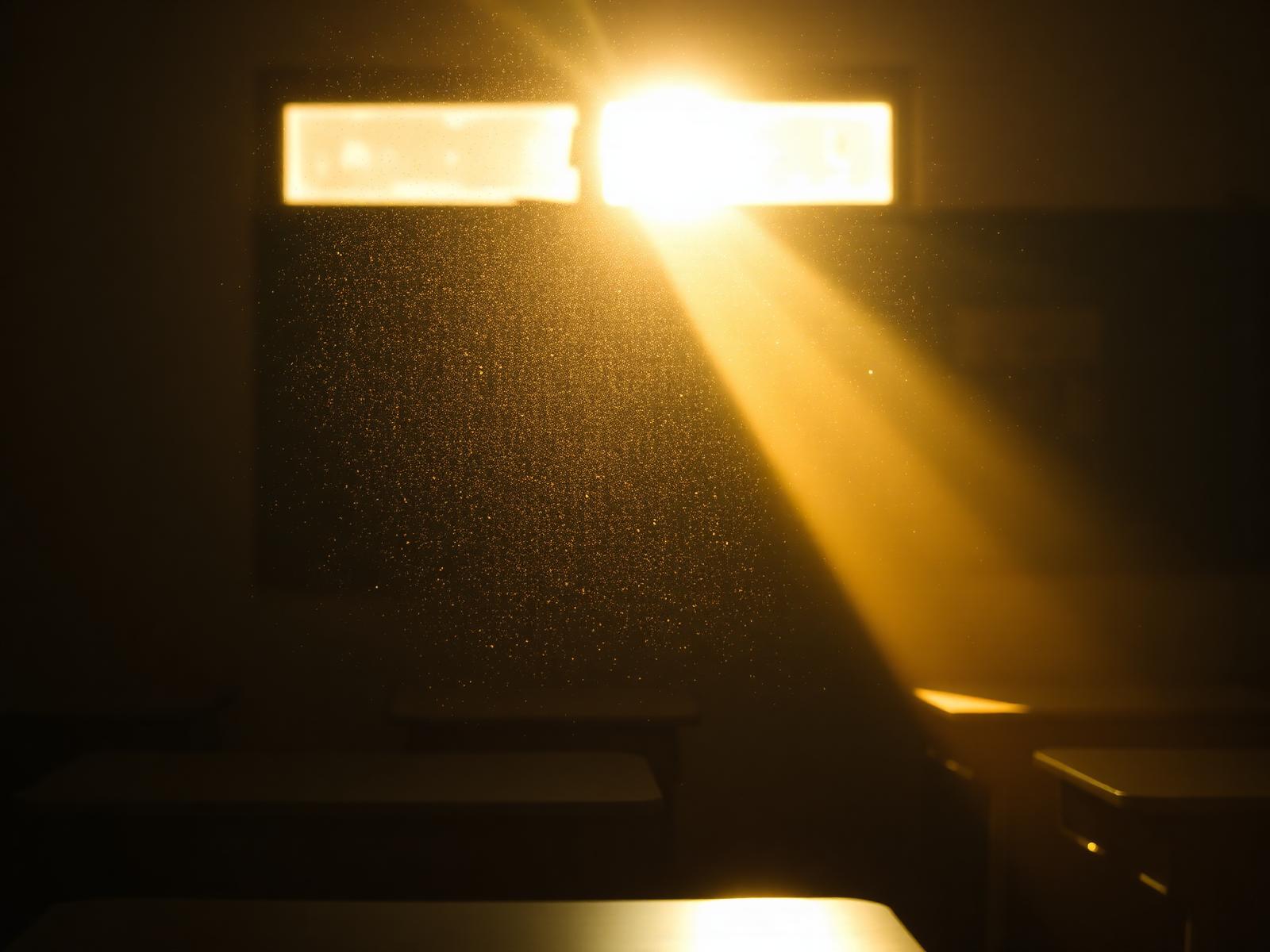
What PM2.5 means
PM2.5 is the fraction of airborne particulate matter with a diameter of 2.5 micrometres or less. Particles in this size range are small enough to remain suspended in air for long periods and to penetrate deep into the respiratory system. Because of those properties, PM2.5 is the particle metric most heavily referenced in international air-quality guidance, including the WHO 2021 air quality guidelines.
In an educational setting, PM2.5 is useful because it reflects both the outdoor environment around the school and what is happening inside the rooms — two influences that almost always need to be considered together.
Common indoor and outdoor sources
Outdoor sources dominate in many UK schools, particularly those close to roads, junctions, drop-off zones or industrial activity. PM2.5 enters through windows, vents, doors and the building fabric. Indoor sources add to that baseline and are more variable.
- Outdoor traffic and combustion ingress through ventilation pathways
- School-run idling at the start and end of the day
- Cooking and food preparation in dining areas
- Cleaning activities that resuspend settled dust
- Art, DT and science activities involving sanding, soldering or burning
- Heating systems with combustion sources
Short-term and continuous monitoring
Two monitoring approaches are common. Short-term monitoring, typically over hours or a few days, establishes a snapshot of conditions in specific rooms and is useful when a concern is well defined. Continuous monitoring, over weeks or longer, captures variation by time of day, day of week and season, and is more useful for evaluating ventilation changes or comparing rooms across an estate.
Neither approach is inherently better; the right choice depends on the question being asked. Establishing what decision the data will inform is usually the first step before specifying the monitoring.
Room-to-room and time-based comparison
PM2.5 in a single classroom is hard to interpret in isolation. The same room can show very different patterns on a quiet morning, a busy afternoon, a windy day or a still cold day. Comparing rooms — for example, a classroom on the road-facing side of the building against one facing a quieter elevation — usually surfaces more useful insight than a single reading in a single room.
Where continuous data is available, time-based comparison against outdoor PM2.5 concentrations (from local monitoring networks) helps separate the outdoor and indoor contributions to what is being measured.
Interpretation limitations
It is important to be honest about what PM2.5 monitoring can and cannot tell you. A single short-term reading does not prove compliance with any standard, does not by itself confirm or rule out a health risk, and cannot identify a specific source on its own. What it can do — particularly in combination with observation, room use and outdoor data — is build a defensible picture of where PM2.5 sits in the broader air quality of the school.
Practical source control and ventilation
Most realistic responses combine source control (managing the indoor contribution) with ventilation strategy (managing the outdoor exchange). Source control includes cleaning specification, scheduling of high-emission activities, and isolating areas like kitchens and DT workshops. Ventilation strategy includes using windows when outdoor conditions allow, and reviewing mechanical or mixed-mode systems where they are present.
Filtration is sometimes considered where outdoor influence is high and ventilation alone cannot be relied on; that is usually a capital decision and should be informed by monitoring rather than installed in advance.
Suitable schools and settings
- Primary and secondary schools near busy roads
- Schools planning ventilation or refurbishment changes
- MATs comparing PM2.5 across sites
- Local authority estates teams scoping classroom conditions
Frequently asked questions
What is PM2.5 and why is it tracked in schools?+
PM2.5 refers to airborne particles 2.5 micrometres or smaller. They originate from combustion, traffic, cooking and some indoor activities. In schools, PM2.5 is tracked because levels can vary significantly between rooms and across the day, and because outdoor ingress means classrooms are not isolated from external air conditions.
Do schools need continuous PM2.5 monitoring?+
Not always. Continuous monitoring is most useful when there is a known source nearby (traffic, construction), when rooms are being compared over time, or when ventilation upgrades are being evaluated. Short-term monitoring is often enough to establish a baseline and identify which rooms warrant longer attention.
How is PM2.5 data interpreted?+
PM2.5 readings are interpreted against WHO 2021 guideline values and read alongside outdoor concentrations, occupancy, ventilation and activity in the room. A single reading rarely tells the full story; patterns over hours, days or weeks are what guide decisions.
Can PM2.5 levels indoors exceed levels outdoors?+
Yes, particularly during certain activities (cooking in dining halls, art and DT work, intensive cleaning) or when outdoor air is being deliberately excluded in winter and indoor sources accumulate. The opposite is also common: outdoor levels can dominate when traffic and combustion are nearby.
What practical steps follow a PM2.5 assessment?+
Typical outputs include a short list of source-control measures, ventilation adjustments, room-use considerations and, where appropriate, a recommendation for ongoing monitoring in the rooms of most concern. Capital options (filtration, mechanical ventilation upgrades) are sequenced behind the operational picture.
Ready to take a closer look at your school's air?
Tell us about your buildings and the rooms or year groups you're concerned about. A specialist will be in touch within one working day.