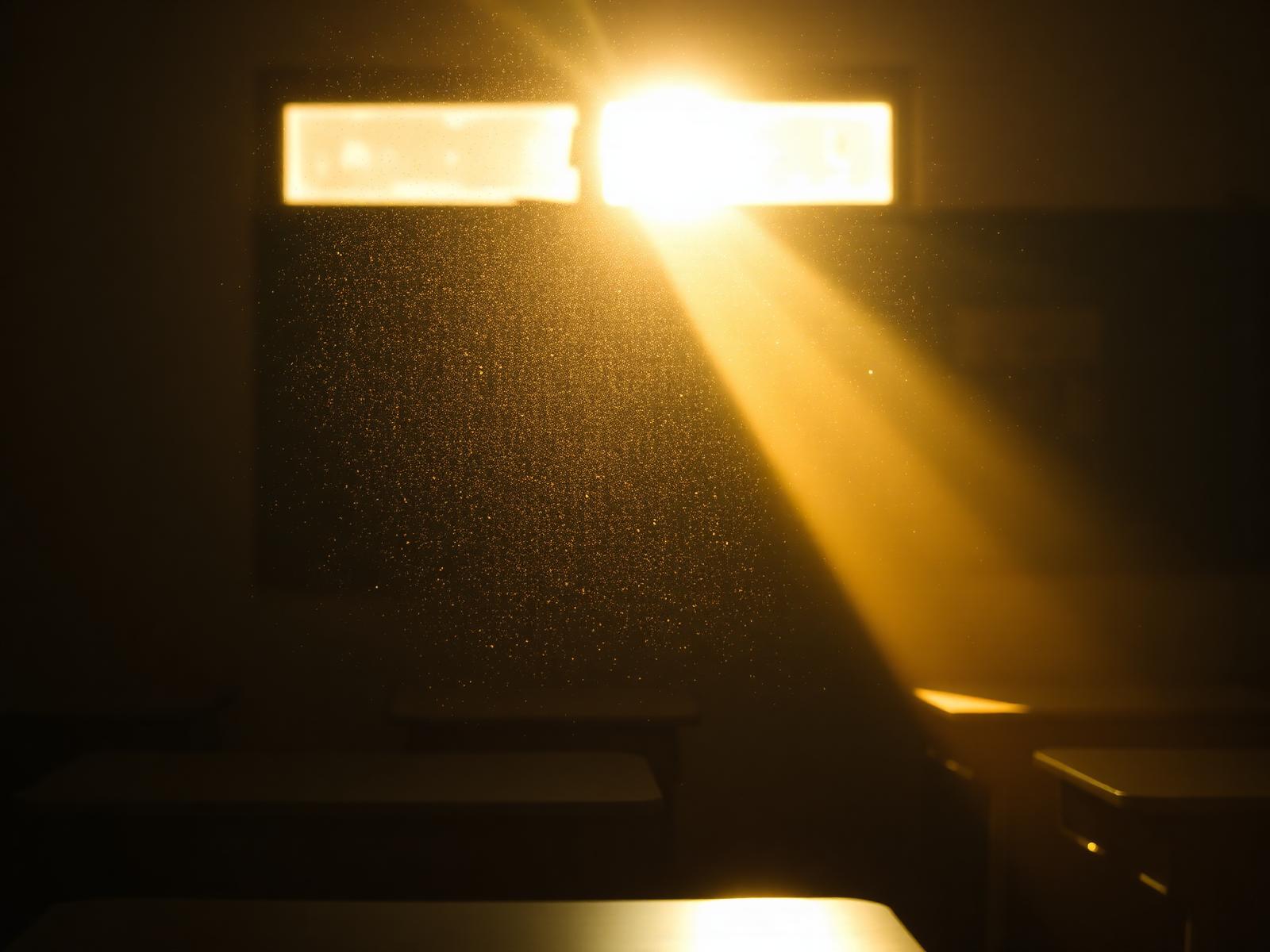
What PM10 means
PM10 is the fraction of airborne particulate matter with an aerodynamic diameter of 10 micrometres or less. It includes the smaller PM2.5 fraction along with coarser particles that originate from dust, soil, pollen and construction-related sources. Because PM10 spans this wider range, it is a useful indicator when the practical concern is dust visible on surfaces or generated by clearly defined activities.
Dust and larger airborne particles
In schools, the PM10 fraction is influenced by a mix of indoor and outdoor sources that differs from PM2.5. Recognising those sources is the starting point for any monitoring exercise.
- Outdoor ingress from soil, pollen, construction and traffic resuspension
- Refurbishment, maintenance and small building works carried out on or near site
- Workshop and DT activities involving sanding, cutting or drilling
- Resuspension from foot traffic, especially in entrance areas and corridors
- Cleaning activities, particularly sweeping and vacuuming with low-grade filters
- Worn carpets, soft furnishings and textiles that release particulates over time
Outdoor ingress
Outdoor PM10 enters through the same routes as PM2.5 — windows, vents, doors and fabric leakage. The difference is that the coarser PM10 fraction tends to settle more quickly once inside, which means accumulation on horizontal surfaces is often the visible symptom. Schools adjacent to unpaved areas, large construction works or unsealed external surfaces can see elevated PM10 contributions even when PM2.5 is moderate.
Refurbishment, maintenance and resuspension
Building works carried out during term time are a common trigger for short-term PM10 elevations, even when reasonable dust-control measures are in place. The same applies to internal maintenance — drilling, sanding and cutting all generate coarser particulates that can persist for hours or days depending on ventilation and cleaning response.
Resuspension is the less visible companion. Particles that have settled on floors and surfaces are returned to the air whenever there is activity in the room. Movement, cleaning and the school day itself all contribute, which is why PM10 readings often peak at the start of the day, after breaks and during cleaning shifts.
Monitoring locations and timing
PM10 monitoring is more informative when location and timing reflect the question being asked. For occupant exposure, sensors sit in occupied rooms at breathing height and run across normal teaching hours. For source identification, sensors may be placed close to suspected origins and compared with control rooms elsewhere on site. For refurbishment work, before-and-after data is more useful than either snapshot in isolation.
Relationship with PM2.5
PM10 always includes the PM2.5 fraction, so PM10 readings cannot be lower than PM2.5 in the same conditions. The useful comparison is the gap between the two: a high PM10 reading with a comparatively modest PM2.5 reading points to a coarser-particle (dust) source, while a high PM10 reading with high PM2.5 points to a finer-particle (combustion) source. In practice the two are often monitored together — see our combined airborne particle monitoring service.
Practical investigation steps
A typical PM10 investigation starts with a short walk-through to identify probable sources and the rooms most exposed to them, followed by targeted monitoring in those rooms during normal use. From there, conclusions usually combine source control (cleaning specification, scheduling of dusty activities, surface management) with operational changes (ventilation use, entrance matting) and only rarely require capital work as a first response.
Suitable schools and settings
- Schools undertaking or recovering from refurbishment
- Sites adjacent to construction activity
- Workshops, DT and design spaces
- Estates teams reviewing cleaning specifications
Frequently asked questions
What is PM10?+
PM10 refers to airborne particles 10 micrometres or smaller. It includes the PM2.5 fraction plus larger inhalable particles such as coarser dust, pollen, soil and construction-related particulates. PM10 is sometimes called the inhalable fraction because particles in this size range can be drawn into the upper respiratory tract.
How is PM10 different from PM2.5?+
PM2.5 is a subset of PM10. PM2.5 tends to be dominated by combustion-related particles and is more strongly linked to traffic and outdoor air policy. PM10 captures a wider mix that includes coarser dust from refurbishment, cleaning, foot traffic and outdoor sources like soil and pollen.
When should a school monitor PM10 specifically?+
PM10 monitoring is most useful where dust is the visible concern — during or after refurbishment, where complaints reference dust on surfaces, in buildings adjacent to construction sites, in workshops or DT areas, and where cleaning regimes are being reviewed.
Where should PM10 monitors be placed?+
Placement reflects the question being asked. To capture occupant exposure, monitors sit at breathing height in occupied rooms away from direct supply or extract. To capture source contributions, monitors may be placed near suspected origins (entrances, workshops, kitchens) and compared against rooms away from those sources.
Does PM10 monitoring replace visual dust inspection?+
No. Surface inspection, observation of cleaning practice and review of how dust is generated and managed remain part of any sensible investigation. Monitoring quantifies what is in the air; visual inspection identifies what is accumulating on surfaces and where it is coming from.
Ready to take a closer look at your school's air?
Tell us about your buildings and the rooms or year groups you're concerned about. A specialist will be in touch within one working day.