Comfort

Thermal Comfort in Schools Explained

Temperature, humidity, overheating, draughts and how seasonal conditions and occupancy combine in real classrooms.

Published 9 min read SchoolAirQuality.uk
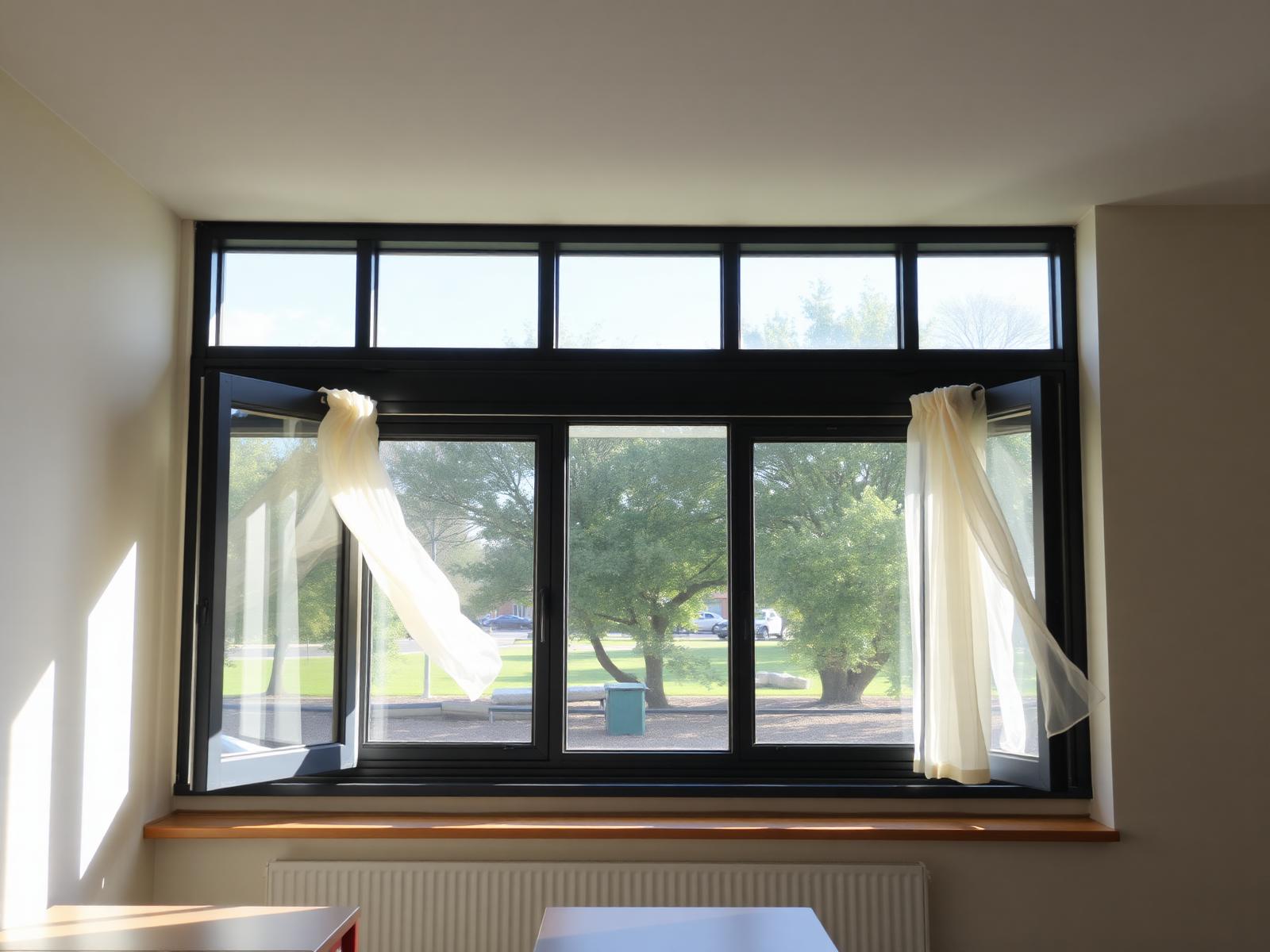
Condensation forming at the edge of a school window in cold weather

What thermal comfort actually means

Thermal comfort is the condition of mind in which people are satisfied with their thermal environment. It depends on more than temperature alone: humidity, air movement, what people are wearing, what they are doing, and how long they have been in the space all play a part.

In a classroom, the same temperature can feel pleasant during morning registration and oppressive by mid-afternoon, simply because the room has warmed up, the air has not been refreshed, and pupils have been sitting still for an extended period.

Temperature and humidity together

Temperature and relative humidity work as a pair. Air at 22°C and 40% relative humidity feels very different from the same temperature at 70% humidity. High humidity makes warm rooms feel oppressive and increases condensation risk on cold surfaces. Very low humidity, more common in heated winter classrooms, can lead to complaints of dryness.

An honest comfort review usually looks at both together, over time, rather than at instantaneous values.

Overheating in summer

Modern, well-insulated school buildings can be very efficient in winter but susceptible to overheating in summer, particularly south-facing classrooms with limited cross-ventilation. The risk grows when shading is insufficient, when occupancy is high, or when ventilation strategies that work in cooler weather lose their effectiveness in still, hot conditions.

Overheating is rarely solved by a single intervention. It usually involves a mix of shading, ventilation operation, occupancy pattern adjustments and, in some buildings, a longer-term review of the cooling strategy.

Draughts and discomfort

Cold draughts are a common source of complaint, particularly in older buildings or where mechanical supply air is poorly distributed. Pupils sitting close to a draughty window or under a poorly diffused supply terminal can feel uncomfortable even when the room average temperature is fine.

Draught complaints are worth taking seriously: they often indicate something that can be fixed operationally — repositioning desks, adjusting a vent — rather than a fundamental building problem.

Seasonal conditions and occupancy

Comfort issues shift through the year. Winter brings condensation, dryness and cold-spot complaints. Spring and autumn typically generate the fewest complaints. Summer brings overheating, especially in classrooms used into the afternoon. A useful comfort review captures more than one season, or at least acknowledges which season the readings reflect.

Occupancy interacts with all of this. A room with twelve pupils behaves very differently from the same room with thirty. Reporting that does not state the occupancy at the time of measurement is harder to act on.

Practical operational actions

Before any capital intervention, most schools can do something operationally: scheduling heating to actual occupancy, opening shading appropriately, planning brief ventilation purges between lessons, repositioning furniture away from draught sources, and reviewing how rooms are used through the day. Classroom ventilation and school building ventilation sit alongside thermal comfort because the three usually interact.

For a broader review, see thermal comfort in schools.

Next step

Want this looked at in your school?

Independent UK school air quality consultants. We scope the question, do the work and explain the findings in plain language.